The rivalry since 1890
Army–Navy Football Game History: Origins, Records and Famous Games
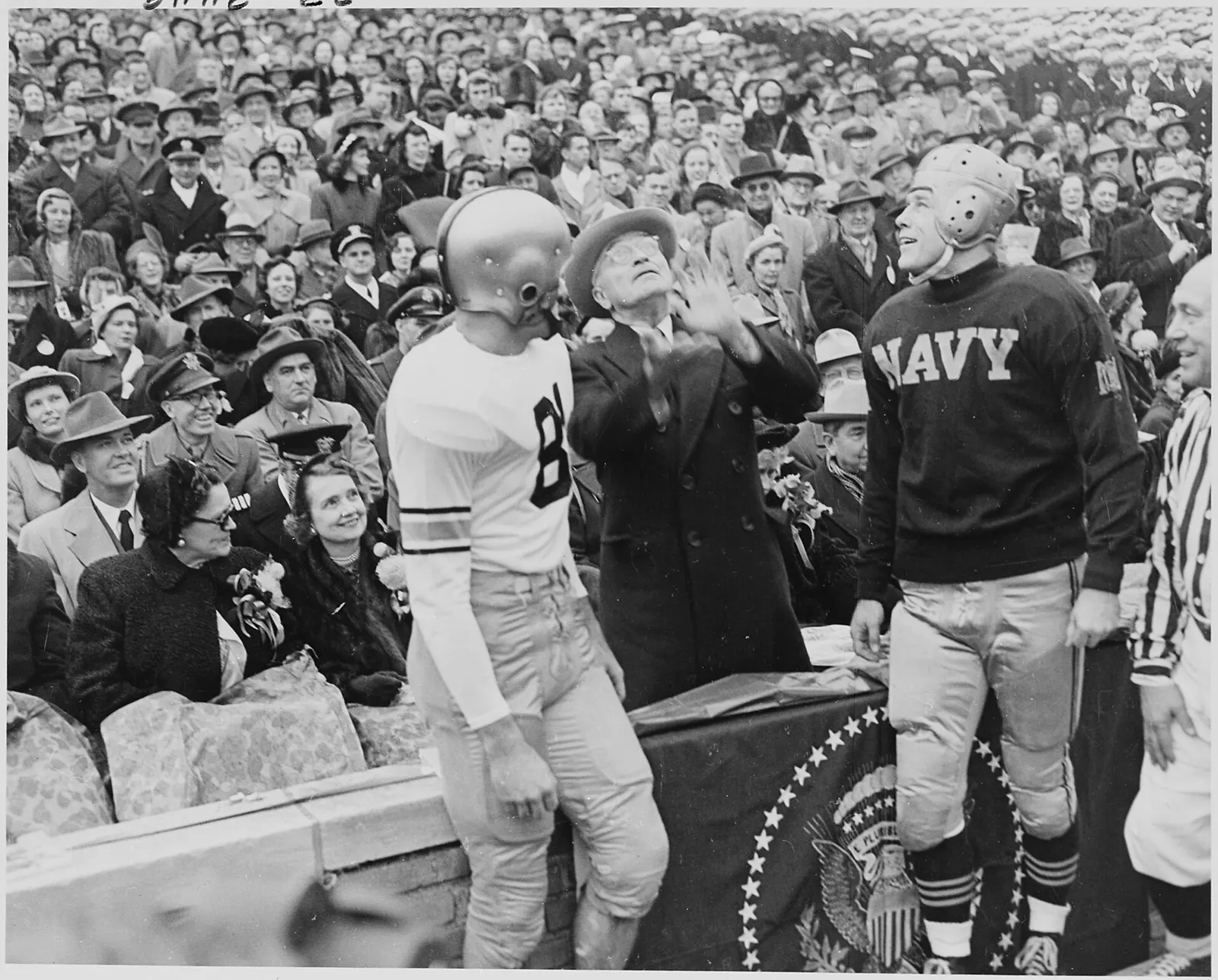
The Army–Navy Game began November 29, 1890, when football teams representing the United States Military Academy and the United States Naval Academy met at West Point, New York. Navy won the inaugural contest 24-0. Through the 2025 season the academies have played 126 times.
All-time series through 2025. Most recent: Navy 17-16.
The origins of Army–Navy football
Football arrived at Annapolis first. Midshipmen had organized teams in the 1880s, and by 1890 Navy had several seasons of games behind it. West Point had no varsity team. When the midshipmen issued a challenge, Cadet Dennis Mahan Michie (opens in a new tab), who had learned the game before arriving at the academy, persuaded academy officials to accept, then organized, trained and played on the first Army team.
The game was played on The Plain, the parade ground at West Point. Navy's experience showed, and the visitors won 24-0. Army answered the next year, winning 32-16 at Annapolis, and the rivalry was established.
Michie later served in the Spanish–American War and was killed at San Juan Hill in 1898. West Point's football stadium, Michie Stadium, which opened in 1924, is named in his honor.
Early development, 1890–1919
The first four games alternated between the two campuses. After the 1893 game, friction between the services over the rivalry led to a suspension that lasted five years. When the series resumed in 1899, it moved to Franklin Field in Philadelphia, a neutral site roughly between the academies, and the game began to draw large crowds. It was also played in Princeton and New York during this period. Army's 1909 season was cut short after the death of cadet Eugene Byrne, and no games were played in 1917 and 1918 during World War I.
The national spotlight, 1920–1939
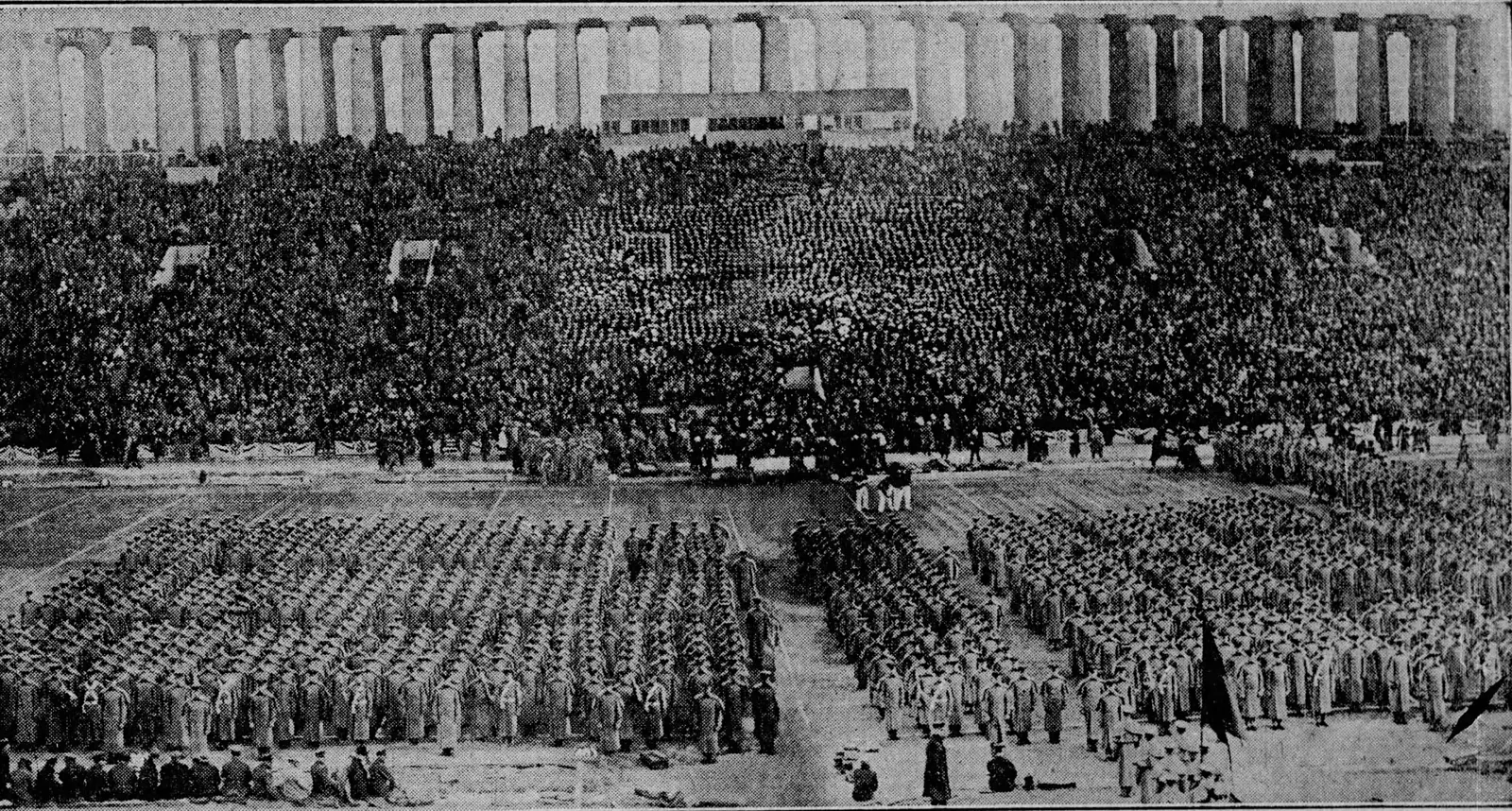
By the 1920s the game was a national event, played in the largest stadiums of New York, Philadelphia and Baltimore. In 1926 it moved to Chicago for the dedication season of Soldier Field, built as a memorial to Americans who served in World War I. More than 100,000 spectators watched a tie 21-21 that is still remembered as one of the great games in the series. An eligibility dispute cancelled the 1928 and 1929 games; the academies met in special charity games in New York in 1930 and 1931 before the regular series resumed.
World War II and the 1940s
Wartime travel restrictions moved the 1942 and 1943 games to Annapolis and West Point. Service academy teams were among the strongest in the country, and in 1944 top-ranked Army and second-ranked Navy met in Baltimore, where Army won 23-7. In 1945 the two were again ranked first and second, and Army won 32-13.
Army's backfield of Felix "Doc" Blanchard and Glenn Davis, known as "Mr. Inside" and "Mr. Outside," led those teams. Blanchard won the Heisman Trophy in 1945 and Davis in 1946. Read their full profiles: Doc Blanchard and Glenn Davis.
The 1950s and 1960s
In 1963 Navy quarterback Roger Staubach, that year's Heisman Trophy winner, led the second-ranked Midshipmen. The game was postponed a week after the assassination of President John F. Kennedy, a Navy veteran, and was played on December 7. Navy won 21-15. During the CBS broadcast, director Tony Verna used instant replay for the first time in a live television sports broadcast.
More on the players behind these eras: Roger Staubach, the five Heisman winners and the notable players archive.
The modern rivalry, 1970–1999
National television and changing college football economics made the game one of the few rivalries that still captured the entire country on a single December afternoon. Beginning in 1972, the game also counted toward the Commander-in-Chief's Trophy (opens in a new tab), awarded to the academy with the best record among Army, Navy and Air Force. The 1980s and 1990s produced a run of close finishes, including Army one-point wins in 1992 and 1995.
The 2000s through today
Navy won 14 consecutive games from 2002 through 2015, the longest streak in the series. Army ended it in 2016 with a 21-17 win in Baltimore and won the next two meetings as well. In 2022 the teams played the first overtime game in series history, with Army winning 20-17 in double overtime. The most recent meeting, in 2025, finished Navy 17-16 in Baltimore, MD.
Neither academy has played for a national championship in decades, and conference realignment has changed both schedules, but the game remains the final regular-season contest for both teams and one of the most-watched rivalries in college football.
Army–Navy football traditions
Every Army–Navy tradition explained, from the March-On to Sing Second.
The March-On
Before kickoff, the entire Corps of Cadets and Brigade of Midshipmen march onto the field in formation.
The prisoner exchange
Students spending a semester at the rival academy are formally returned to their own side before the game.
Mascots
Navy's mascot is Bill the Goat; Army's is the mule. Both animals appear on the sidelines, and both have been the target of spirit missions over the years.
Special uniforms and spirit videos
Each team wears a one-game uniform design, and both academies release spirit videos in the weeks before the game.
Singing second
After the final whistle, both teams stand together for both alma maters. The losing academy's song is sung first, and the winners "sing second."
"Beat Army" and "Beat Navy"
The rallying cries appear on signs, buildings and ships throughout the year, not just in December.
America's Game
Senior military leaders and often the President attend, and players on both sidelines will go on to serve together after graduation, which is why the game is widely called America's Game.
Why the rivalry matters
The players are students preparing for commissioned service. Opponents on the field may later serve in the same units, on the same ships or in the same theaters. The game is a contest between two schools with a shared mission, and that combination of intense competition and mutual respect is what sets it apart.
Historical timeline
- 1890First game on The Plain at West Point: Navy 24-0.
- 1893Navy's Joseph Mason Reeves is often credited with wearing an early leather head protector in the game.
- 1899The series resumes in Philadelphia after a five-year suspension.
- 1926Tie 21-21 before a crowd of more than 100,000 at Soldier Field, Chicago.
- 1944No. 1 Army defeats No. 2 Navy: Army 23-7, Baltimore.
- 1945No. 1 Army defeats No. 2 Navy again: Army 32-13.
- 1963Navy 21-15 in the game postponed after President Kennedy's assassination; CBS used instant replay for the first time in a live broadcast.
- 1972The Commander-in-Chief's Trophy is first awarded.
- 2002Navy 58-12 begins Navy's 14-game winning streak.
- 2016Army 21-17 ends Navy's streak.
- 2022Army 20-17 in double overtime, the series' first overtime game.
- 2025Most recent game: Navy 17-16, Baltimore, MD.
Years without a game
Between 1890 and 2025 there were 10 years with no game. These are not counted as wins, losses or ties.
- 1894–1898: The series was suspended after the 1893 game amid tension between the two services over the rivalry. It resumed in 1899 at a neutral site in Philadelphia.
- 1909: Army cancelled the remainder of its season after cadet Eugene Byrne died from an injury suffered in a game against Harvard.
- 1917–1918: No game was played during U.S. involvement in World War I.
- 1928–1929: The academies could not agree on player-eligibility rules, so no game was scheduled.
Frequently asked questions
When was the first Army–Navy football game?
November 29, 1890, on The Plain at West Point, New York.
Who won the first Army–Navy Game?
Navy, 24-0.
Why did Army and Navy start playing football against each other?
Navy midshipmen, who had played football for several years, challenged the cadets. Cadet Dennis Mahan Michie accepted, organized and coached West Point's first team.
Who has won more Army–Navy football games?
Navy leads the series 64-55-7 through 2025.
How many times have Army and Navy played?
126 completed games through 2025.
Has the Army–Navy Game ever ended in a tie?
Yes, 7 times: 1905, 1923, 1926, 1948, 1956, 1965, 1981.
Why is the game often played in Philadelphia?
Philadelphia sits roughly between West Point and Annapolis and has the stadium capacity for the crowd. It has hosted 90 games, more than any other city.
Where has the game been held?
11 host cities, including Philadelphia, PA, New York, NY, Baltimore, MD, East Rutherford, NJ, West Point, NY, Annapolis, MD. See records by host city on the records page.
What was the longest winning streak?
Navy's 14 straight wins from 2002 to 2015. Army's longest is 5 games (1927–1933).
Has Army–Navy ever gone to overtime?
Yes. The 2022 game (Army 20-17) went to double overtime.
Why do the academies exchange cadets and midshipmen before the game?
A small number of students spend a semester at the other academy. Before kickoff they are returned to their own school in the traditional prisoner exchange.
Why do the teams sing after the game?
Both teams stand together for both alma maters. The losing team's song is sung first, so the winners "sing second."
What is the Commander-in-Chief's Trophy?
A trophy first awarded in 1972 to the service academy with the best record among Army, Navy and Air Force in their football games against each other.
What is the difference between Army–Navy football and the Star Series?
Football is a single annual game. The Star Series is a year-long competition across many sports, where winning designated head-to-head contests earns Stars.
Why are pranks part of the rivalry?
Spirit missions, signs and mascot-related stunts have long been part of game week as a way to show academy pride. Some historical incidents were unauthorized and are documented here without endorsement.