The rivalry since 1890
Army–Navy Football Traditions: Every Major Ritual Explained
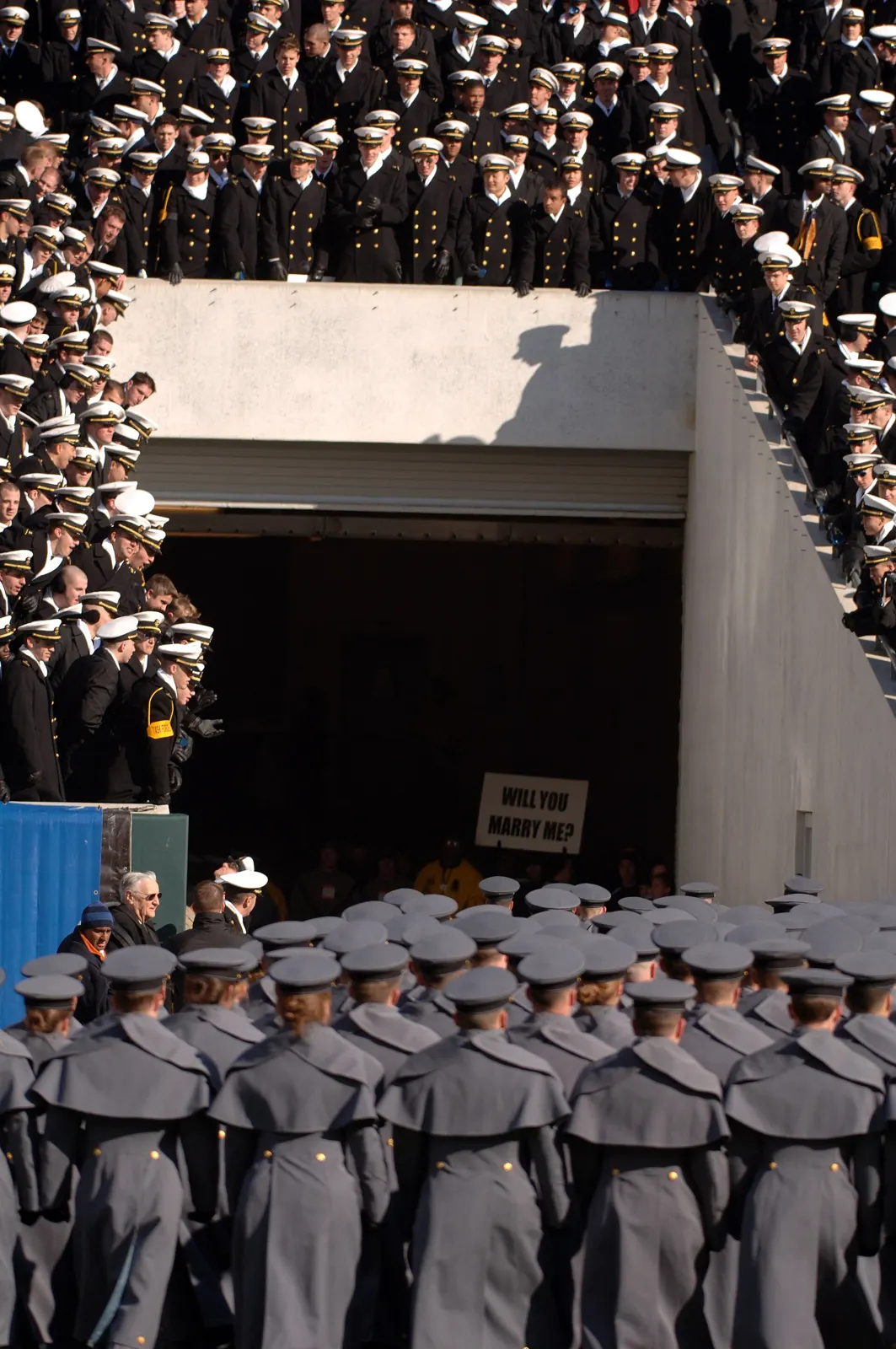
The Army–Navy Game has been played since 1890, and over more than a century it has gathered rituals unlike any other game. Here is what each one means. For the full story of the series, see Army–Navy football history.
The March-On
West Point's Corps of Cadets and the Naval Academy's Brigade of Midshipmen march onto the field in formation before kickoff. More on the March-On.
The prisoner exchange
Exchange-semester students are returned to their own academies before the game, a lighthearted ceremony with a misleading name. How it works.
Sing Second and the alma maters
After the game both teams sing West Point's “Alma Mater” and the Naval Academy's “Navy Blue and Gold.” The loser's song comes first; the winner sings second. Why it matters.
Mascots
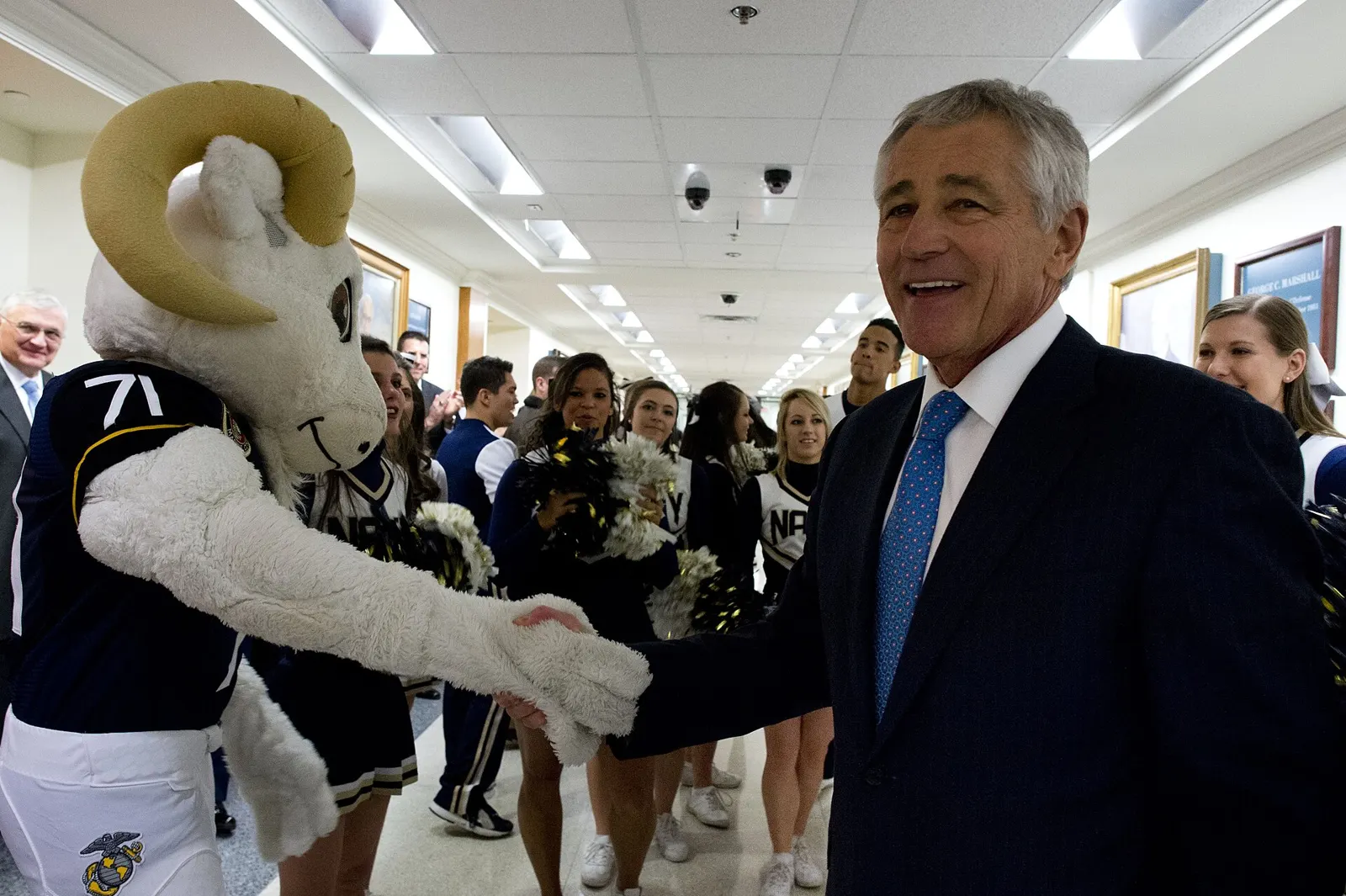
Mascot raids and other stunts are collected in the Army–Navy pranks and spirit missions archive.
Army is represented by mules (opens in a new tab) and Navy by a goat, Bill (opens in a new tab). Both mascots are central to game-week spirit, and both have at times been the target of rival “spirit missions.”
Beat Army and Beat Navy
At each academy, “Beat Navy” or “Beat Army” is a year-round slogan that peaks in game week with banners, rallies, chants and spirit events. West Point and the Naval Academy each hold spirit activities in the days before the game.
Spirit videos
Students and the academies produce spirit videos each season, from comedy sketches to dramatic tributes, shared widely in the run-up to the game.
Special uniforms
In recent years both teams have worn one-off uniforms for the game, often honoring a military unit, operation, piece of equipment or chapter of service history.
Parachute teams and flyovers
Military parachute teams and aircraft flyovers have often been part of pregame. Whether they appear in a given year is announced separately. Pregame ceremonies.
Presidents at the game
Many presidents have attended the Army–Navy Game. On some occasions a president has sat on one side for the first half and crossed to the other side at halftime. This does not happen every year, and attendance is not assumed until announced.
The Commander-in-Chief's Trophy
First awarded in 1972, the trophy goes to the academy with the best record in football games among Army, Navy and Air Force. The Air Force describes it as a trophy created by the academies’ graduate communities (opens in a new tab) for the triangular series. Winning the Army–Navy Game does not by itself win the trophy; the Air Force games also count.
Academy bands
The West Point Band and the Naval Academy's musical units play the March-On, fight songs and halftime shows.
After the game
Beyond the alma maters, players commonly shake hands and embrace at midfield. The rivalry is fierce for sixty minutes and then gives way to respect.
Related: the Star Series across all sports, and the rivalry timeline.