Overview and quick facts
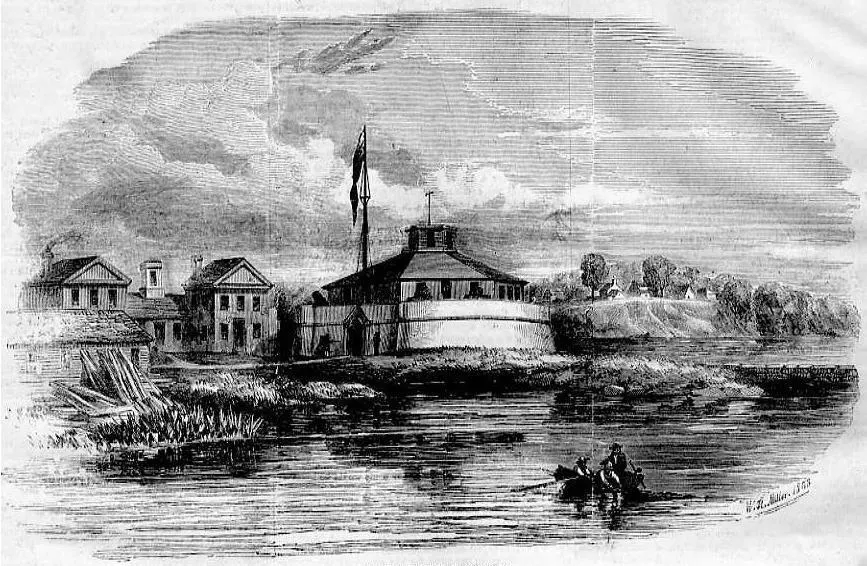
The United States Naval Academy opened on Oct. 10, 1845, as the Naval School, with about 50 midshipmen and seven professors on the grounds of the Army's old Fort Severn (opens in a new tab) in Annapolis, Maryland. Navy Secretary George Bancroft created it to give the Navy what the Army had enjoyed at West Point since 1802: a shore-based school that would turn young men into professional officers before they went to sea.
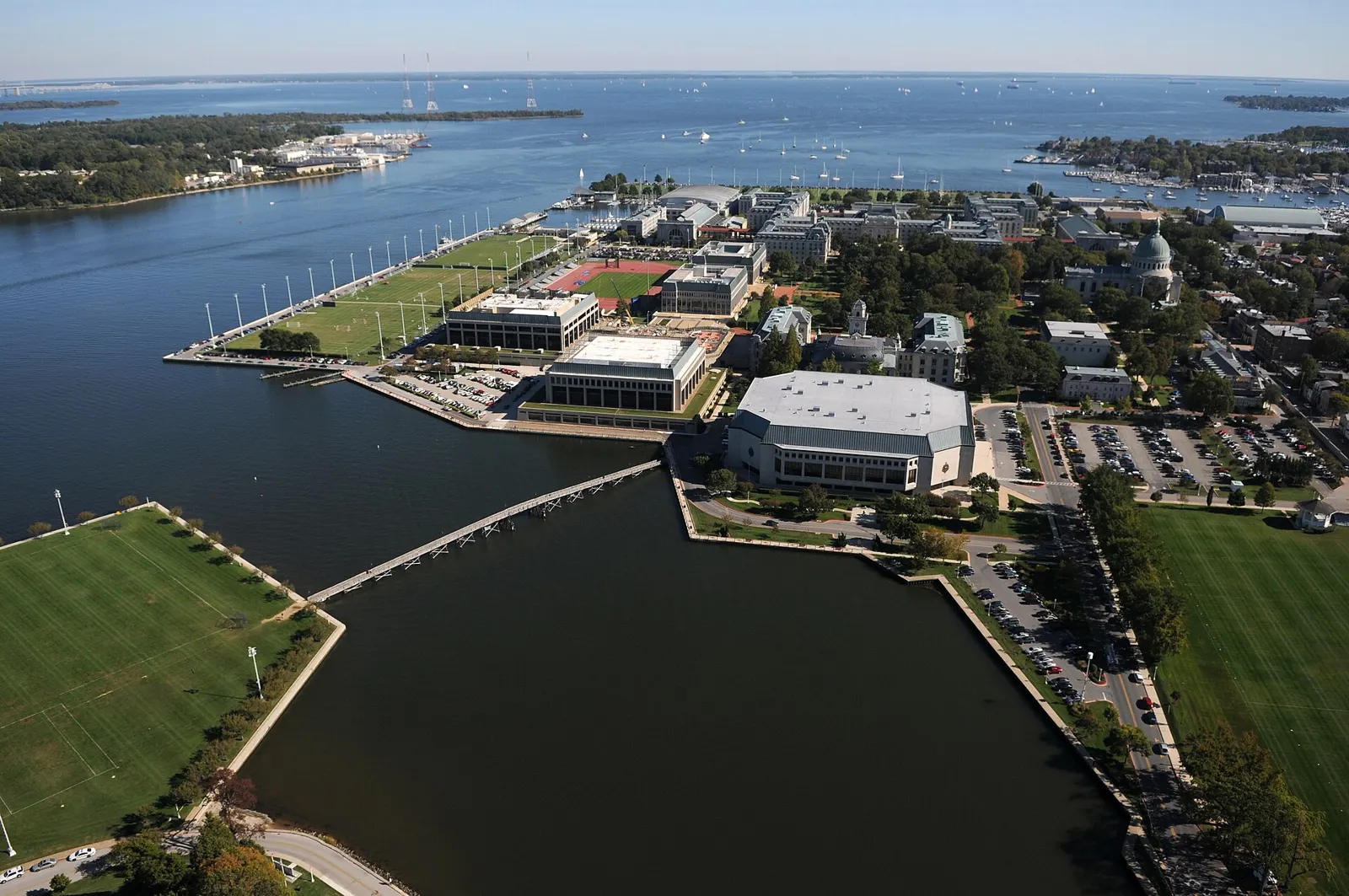
More than 180 years later the academy is the undergraduate college of the naval service. About 4,400 midshipmen live and study on the 338-acre campus known as the Yard. They earn a Bachelor of Science degree (opens in a new tab) and, in most cases, a commission as an ensign in the Navy or a second lieutenant in the Marine Corps, followed by at least five years of active service.
Its graduates include a president, a Nobel laureate in physics, the admirals who led the Navy through two world wars, the first American in space and dozens of astronauts, and Heisman Trophy winners Joe Bellino (opens in a new tab) and Roger Staubach (opens in a new tab). For football fans, Annapolis is also one half of the Army–Navy rivalry, which Navy opened with a 24-0 victory at West Point in 1890.
- Official name
- United States Naval Academy (USNA)
- Founded
- Oct. 10, 1845, as the Naval School
- Renamed
- U.S. Naval Academy, 1850
- Founder
- Navy Secretary George Bancroft
- Original site
- Fort Severn, Annapolis
- Location
- Annapolis, Maryland, on the Severn River
- Campus
- The Yard, 338 acres
- Student body
- Brigade of Midshipmen
- Athletic nickname
- Midshipmen (Mids)
- Colors
- Navy blue and gold (adopted 1892)
- Mascot
- Bill the Goat (since 1893)
- Motto
- Ex Scientia Tridens — “From Knowledge, Sea Power”
- Degree
- Bachelor of Science
- Commissions
- Navy ensign or Marine Corps second lieutenant
- Football conference
- American Athletic Conference (since 2015)
- Other sports
- Primarily the Patriot League, plus sport-specific leagues
- Official website
- usna.edu
This independent guide is not affiliated with or endorsed by the United States Naval Academy. Current enrollment and admissions figures are in the statistics section, labeled by year.
Before 1845: How the Navy trained officers
Congress authorized a new naval force in 1794 at President George Washington's urging, and the frigates Constitution, Constellation and United States were among the new Navy's first ships. For the next half century the service trained its future officers the way the Royal Navy did: boys were appointed midshipmen and sent directly to sea, learning seamanship, navigation and command from the officers above them and from whatever instruction a ship's schoolmaster could provide.
The system produced capable sailors, but critics argued it was haphazard and left young officers without the mathematics and science that steam engines and modern gunnery would demand. President John Quincy Adams urged Congress to establish a naval academy in 1825, without success. The turning point came in 1842, when the Somers affair — the hanging at sea of a midshipman and two sailors accused of plotting mutiny aboard a training brig — exposed the risks of educating teenagers aboard ship and became a catalyst for a school ashore.
George Bancroft's solution
George Bancroft, a historian who became Navy secretary in 1845, found a way to act without waiting for a new law. The Army agreed to transfer Fort Severn, a small post where the Severn River meets Annapolis harbor, and the Navy took possession on Sept. 3, 1845. Bancroft reassigned existing funds and instructors, and the Naval School opened five weeks later under Cmdr. Franklin Buchanan, its first superintendent.
The site offered protected water for boat drills, an existing set of buildings and a location far from the distractions of a large port city — advantages that kept the academy in Annapolis even as it outgrew the old fort.
Complete Naval Academy history
The academy's story tracks the Navy's own transformation from sail to steam, from coastal defense to global reach, and from an all-male, nearly all-white officer corps to the brigade of today. The narrative below follows each era; the detailed timeline further down lists the dated milestones.
1845–1860: From Naval School to Naval Academy
Early instruction mixed classroom subjects with practical seamanship. In 1850 the school was reorganized as the United States Naval Academy and adopted a consecutive four-year course, with summers spent at sea on training ships. Appointments came under congressional control in 1852, the system of nomination (opens in a new tab)s that still shapes admissions. In 1854 six graduates became the first to complete the full formal course.
By 1860 the academy had begun to accept occasional foreign students — Pierre d'Orléans of France became the first foreign national to attend that year — and the Herndon Monument was erected in memory of Cmdr. William Lewis Herndon, lost at sea in 1857 while trying to save his passengers.
1861–1865: The Civil War and the move to Newport
Maryland was a slave state bordering Virginia, and when war broke out in April 1861 Annapolis was considered too exposed. Midshipmen loyal to the Union boarded the frigate Constitution on April 25, 1861, and sailed north; classes resumed in Newport, Rhode Island, on May 13. Many Southern midshipmen and graduates resigned to join the Confederacy, while others stayed with the Union Navy. The academy returned to Annapolis after the war in 1865.
1865–1900: Steam, science and a new Navy
The postwar decades brought steam engineering and science into the curriculum. Class rings appeared in 1869. The U.S. Naval Institute (opens in a new tab), still a leading forum for naval thought, was founded at the academy in 1873, and instructor Albert A. Michelson (opens in a new tab), Class of 1873, measured the speed of light along the academy seawall in 1878 — work that later contributed to his 1907 Nobel Prize in physics. Graduates were authorized to enter the Marine Corps in 1882, the origin of today's Navy–Marine Corps commissioning choice.
Two graduates shaped this era. Alfred Thayer Mahan, Class of 1859, published The Influence of Sea Power Upon History, arguing that national power rests on command of the sea. George Dewey, Class of 1858, applied that idea at Manila Bay in 1898, destroying a Spanish squadron in the Spanish-American War. Athletics took hold as well: Navy played its first football game on Dec. 11, 1879, and beat Army 24-0 in the first Army–Navy Game in 1890. Blue and gold became the academy's colors in 1892, and a goat first served as mascot in 1893.
1900–1945: The modern Yard and two world wars
Around the turn of the century the academy rebuilt almost completely. Architect Ernest Flagg's Beaux-Arts campus replaced the old fort buildings: Dahlgren and Macdonough halls were completed in 1903, the first wings of Bancroft Hall (opens in a new tab) opened in 1906, Mahan Hall's library followed in 1907 and the domed Chapel held its first service on May 28, 1908. In 1913 the remains of Revolutionary War hero John Paul Jones were placed in the crypt beneath the Chapel. Graduation-day commissioning was authorized in 1912 — the start of the famous hat toss — and Congress authorized Bachelor of Science degrees in 1933.
Aviation and submarines changed the fleet, and graduates led it through both world wars. In World War II, Ernest J. King (opens in a new tab), Class of 1901, served simultaneously as chief of naval operations and commander in chief of the U.S. Fleet; Chester W. Nimitz (opens in a new tab), Class of 1905, commanded American naval forces in the Pacific; and William F. Halsey Jr., Class of 1904, commanded the Third Fleet. To meet wartime demand the academy accelerated its program, graduating classes early — including future President Jimmy Carter's Class of 1947, which graduated in June 1946.
1945–1975: Integration, nuclear power and space
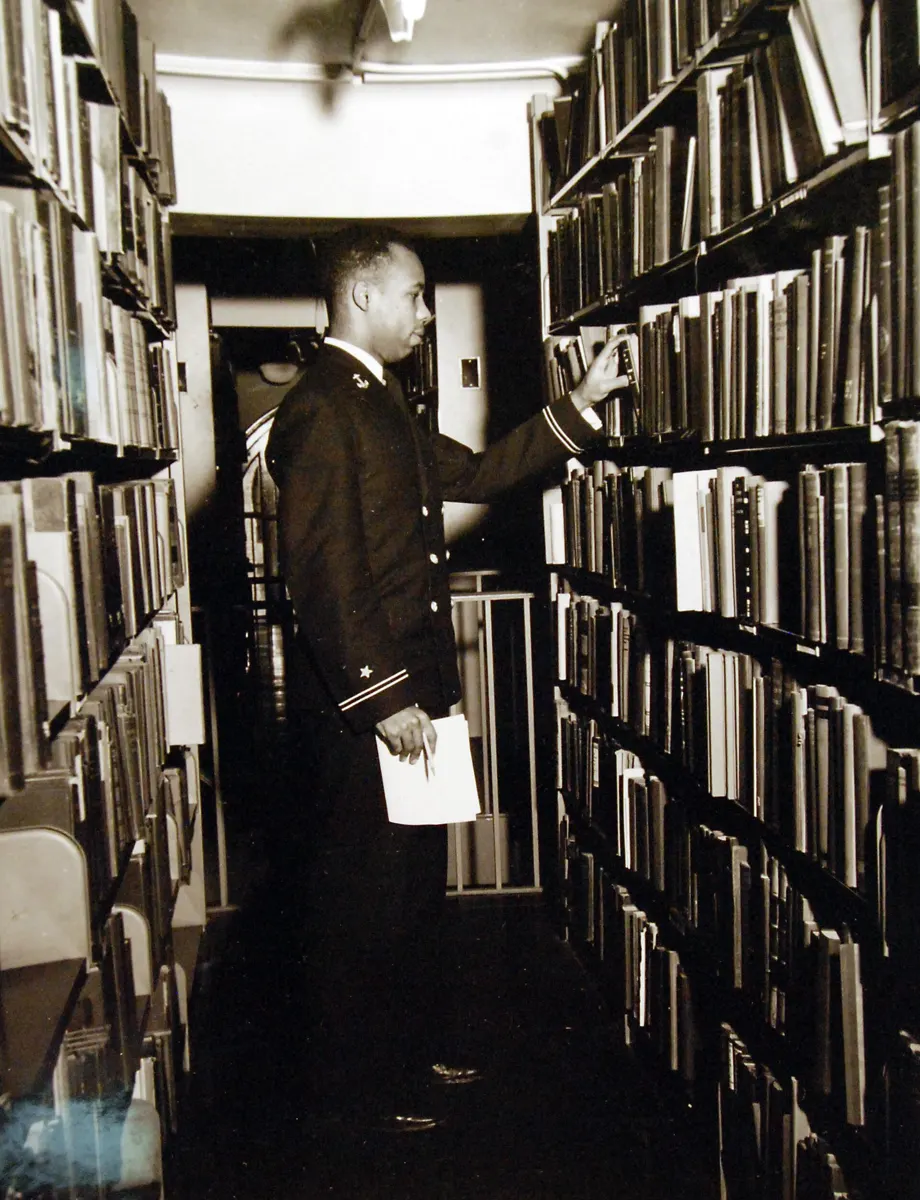
On June 3, 1949, Wesley A. Brown became the first Black midshipman to graduate, 77 years after James Conyers became the first Black midshipman to enter. Brown endured isolation and hostility from some classmates and went on to a 20-year career in the Navy's Civil Engineer Corps.
The Cold War demanded engineers. Hyman G. Rickover, Class of 1922, led the development of the nuclear-powered Navy, and the academy's engineering complex, completed in 1975, bears his name. Graduates also led the space program: Alan Shepard (opens in a new tab), Class of 1945, became the first American in space in 1961, and Jim Lovell (opens in a new tab), Class of 1952, flew on Gemini and Apollo missions, including Apollo 13. Many graduates served in Vietnam, among them future Medal of Honor (opens in a new tab) recipient James Stockdale, Class of 1947, and future Sen. John McCain, Class of 1958, both prisoners of war. Navy-Marine Corps Memorial Stadium was dedicated on Sept. 26, 1959, and Nimitz Library opened in 1973.
1976–2000: Women join the Brigade
On July 6, 1976, the academy inducted its first 81 women, following a 1975 law that opened the service academies to women. In May 1980, Elizabeth Anne Rowe became the first woman to graduate from the academy, as part of the first class that included women. Juliane Gallina became the first woman to lead the Brigade of Midshipmen as brigade commander in 1991, and Wendy Lawrence (opens in a new tab), Class of 1981, became the first female academy graduate to fly in space in March 1995.
The traditional June Week was renamed Commissioning Week in 1979. As the Cold War ended, the curriculum continued to expand in computing, engineering and the sciences while keeping the leadership and professional training at its core.
2001–2026: War, cyber and new leadership
After the Sept. 11, 2001, attacks, graduates deployed across two decades of conflict in Afghanistan, Iraq and elsewhere, many as Navy SEALs, aviators, surface warfare officers and Marine Corps infantry officers. The academy added the Uriah P. Levy Center and Jewish Chapel in 2005 and Wesley Brown Field House in 2008.
Cybersecurity became a core subject. Hopper Hall, home of the Center for Cyber Security Studies and named for computing pioneer Rear Adm. Grace Hopper, held classes from September 2020 and officially opened on Oct. 15, 2020. Vice Adm. Yvette Davids became the first woman to lead the academy as superintendent on Jan. 11, 2024, and Marine Lt. Gen. Michael Borgschulte succeeded her as the 66th superintendent on Aug. 15, 2025. On the field, Navy beat Army 17-16 in Baltimore on Dec. 13, 2025, to win the Commander-in-Chief's Trophy and finish 11-2.
Naval Academy timeline
Dated milestones from the founding of the Navy to the most recent class. Expand each era for details.
Before 1845 (3)
- Congress authorizes a new naval force at President George Washington's urging.
- President John Quincy Adams urges Congress to create a naval academy.
- The Somers affair becomes a catalyst for founding a school ashore.
1845–1860: Founding and early growth (6)
- Fort Severn in Annapolis is transferred from the War Department to the Navy.
- The Naval School opens under Cmdr. Franklin Buchanan with about 50 midshipmen and seven professors.
- The school is renamed the United States Naval Academy and adopts a four-year course.
- Appointments come under congressional control.
- Six graduates become the first to complete the full formal course.
- Pierre d'Orléans becomes the first foreign national to attend; the Herndon Monument is erected.
1861–1899: Civil War and modernization (12)
- Midshipmen sail north aboard Constitution; classes resume in Newport, R.I., on May 13.
- The academy returns to Annapolis after the Civil War.
- Class rings are adopted.
- James Conyers becomes the first Black midshipman; he resigned in 1873.
- The U.S. Naval Institute is founded at the academy.
- Albert Michelson measures the speed of light along the academy seawall.
- Navy plays its first football game, a 0-0 tie with the Baltimore Athletic Club.
- Graduates are authorized to enter the Marine Corps.
- Navy beats Army 24-0 in the first Army–Navy Game.
- Blue and gold are designated the academy colors.
- Bill the Goat debuts as mascot.
- The academy seal is adopted; construction of Dahlgren Hall begins.
1900–1945: The modern Yard (8)
- Dahlgren and Macdonough halls are completed.
- The first two wings of Bancroft Hall are completed.
- Mahan Hall library is completed; Albert Michelson wins the Nobel Prize in physics.
- The first service is held in the present Chapel.
- Graduation-day commissioning is authorized, starting the hat-toss tradition.
- John Paul Jones is interred in the Chapel crypt.
- Congress authorizes Bachelor of Science degrees.
- The museum building, later named Preble Hall, is dedicated.
1946–1975: Integration and the Cold War (7)
- Wesley A. Brown becomes the first Black graduate.
- Upperclassmen begin greasing the Herndon Monument for the plebe climb.
- Navy-Marine Corps Memorial Stadium is dedicated.
- Joe Bellino wins the Heisman Trophy.
- Roger Staubach wins the Heisman Trophy.
- Nimitz Library is completed.
- The Rickover Hall engineering complex is completed.
1976–2000: Women at the academy (5)
- The first 81 women are inducted.
- June Week is renamed Commissioning Week.
- Elizabeth Anne Rowe becomes the first woman to graduate.
- Juliane Gallina becomes the first woman brigade commander.
- Wendy Lawrence, Class of 1981, becomes the first female graduate to fly in space.
2001–2026: The modern academy (10)
- Navy beats Army 14 consecutive times, the longest streak in the series.
- The Uriah P. Levy Center and Jewish Chapel is dedicated.
- Wesley Brown Field House is dedicated.
- Navy football joins the American Athletic Conference.
- Hopper Hall, home of the Center for Cyber Security Studies, officially opens.
- Vice Adm. Yvette Davids becomes superintendent, the first woman to lead the academy.
- Marine Lt. Gen. Michael Borgschulte becomes the 66th superintendent.
- Navy beats Army 17-16 in Baltimore and wins the Commander-in-Chief's Trophy.
- The Class of 2026 graduates 1,059 midshipmen.
- The Class of 2030 reports for Induction Day, with 1,204 projected plebes.
Important Naval Academy firsts
Firsts mark when barriers fell and when the academy's mission changed. Entering the academy is not the same as graduating, and the table notes the difference.
| Date | Milestone | Context |
|---|---|---|
| Oct. 10, 1845 | Founding class | About 50 midshipmen and seven professors began the Naval School at Fort Severn. |
| 1854 | First graduates of the full course | Six graduates completed the formal course of study, years after the school opened, because early midshipmen split their training between Annapolis and sea duty. |
| 1860 | First foreign national to attend | Pierre d'Orléans of France attended the academy. International midshipmen still graduate each year; the Class of 2026 included 12. |
| 1872 | First Black midshipman | James Conyers entered in 1872 and resigned in November 1873 after severe harassment. He did not graduate. |
| 1882 | Graduates enter the Marine Corps | A new law authorized graduates to take Marine Corps commissions, beginning the academy's two-service mission. |
| June 3, 1949 | First Black graduate | Wesley A. Brown graduated 77 years after Conyers entered, and later served 20 years in the Civil Engineer Corps. The field house dedicated in 2008 bears his name. |
| May 5, 1961 | First American in space | Alan Shepard, Class of 1945, flew Freedom 7, the first American human spaceflight. |
| July 6, 1976 | First women admitted | 81 women were inducted with the Class of 1980 after Congress opened the academies to women. |
| May 1980 | First woman graduate | Elizabeth Anne Rowe was the first woman to graduate, as part of the first class that included women. |
| 1991 | First woman brigade commander | Juliane Gallina, Class of 1992, became the senior midshipman leading the Brigade. |
| March 1995 | First female graduate in space | Wendy Lawrence, Class of 1981, a Navy helicopter pilot, flew on the space shuttle Endeavour. |
| Jan. 11, 2024 | First woman superintendent | Vice Adm. Yvette Davids took command of the academy. |
Famous Naval Academy graduates
Every person below graduated from the academy; class years follow the academy's convention, which names a class by its scheduled graduation year. Former midshipmen who did not graduate are not included.
Presidents and government
Class of 1947 · Navy
Jimmy Carter
Highest rank: Lieutenant
Graduated in June 1946 under the wartime accelerated program and served in submarines, including work in the early nuclear-submarine program. The 39th president (1977-1981) and 2002 Nobel Peace Prize recipient is the only academy graduate to become president.
Class of 1953 · Navy
Ross Perot
Served in the Navy before founding Electronic Data Systems; ran for president as an independent in 1992 and 1996.
Class of 1958 · Navy
John McCain
Highest rank: Captain
Naval aviator shot down over North Vietnam in 1967 and held as a prisoner of war for more than five years. Later a U.S. senator from Arizona and the 2008 Republican presidential nominee.
Class of 1968 · Navy
Michael G. Mullen
Highest rank: Admiral
Chief of naval operations and later chairman of the Joint Chiefs of Staff from 2007 to 2011.
Naval and military leaders
Class of 1858 · Navy
George Dewey
Highest rank: Admiral of the Navy
Destroyed the Spanish squadron at Manila Bay in 1898; Congress later created the unique rank of admiral of the Navy for him.
Class of 1859 · Navy
Alfred Thayer Mahan
Highest rank: Rear admiral
Naval strategist whose 1890 book The Influence of Sea Power Upon History shaped navies around the world.
Class of 1901 · Navy
Ernest J. King
Highest rank: Fleet admiral
Served at the same time as chief of naval operations and commander in chief of the U.S. Fleet during World War II.
Class of 1904 · Navy
William F. Halsey Jr.
Highest rank: Fleet admiral
Commanded the Third Fleet in the Pacific during World War II.
Class of 1905 · Navy
Chester W. Nimitz
Highest rank: Fleet admiral
Commanded American naval forces in the Pacific during World War II. Nimitz Library is named for him.
Class of 1922 · Navy
Hyman G. Rickover
Highest rank: Admiral
Led the development of naval nuclear propulsion and is widely called the father of the nuclear Navy. The Rickover Hall engineering complex is named for him.
Class of 1923 · Navy
Arleigh Burke
Highest rank: Admiral
World War II destroyer commander who served three terms as chief of naval operations; a class of guided-missile destroyers bears his name.
Class of 1947 · Navy
James Stockdale
Highest rank: Vice admiral
Senior naval officer among prisoners of war in North Vietnam, where he was held for more than seven years; received the Medal of Honor.
Astronauts and science
Class of 1873 · Navy
Albert A. Michelson
Physicist who measured the speed of light along the academy seawall and in 1907 became the first American to win a Nobel Prize in science.
Class of 1945 · Navy
Alan Shepard
Highest rank: Rear admiral
First American in space (1961) and later commander of Apollo 14, during which he walked on the moon. Graduated in 1944 with the Class of 1945.
Class of 1952 · Navy
Jim Lovell
Highest rank: Captain
Flew on Gemini 7, Gemini 12, Apollo 8 and Apollo 13, whose crew returned safely after an in-flight explosion in 1970.
Class of 1968 · Marine Corps
Charles Bolden
Highest rank: Major general
Flew four space shuttle missions and later served as NASA administrator.
Class of 1981 · Navy
Wendy Lawrence
Highest rank: Captain
Navy helicopter pilot who became the first female academy graduate to fly in space, in 1995.
Athletes
Class of 1961 · Navy
Joe Bellino
Halfback who won the 1960 Heisman Trophy, the first for a Navy player.
Football profileClass of 1965 · Navy
Roger Staubach
Won the 1963 Heisman Trophy, served four years on active duty including in Vietnam, then led the Dallas Cowboys to two Super Bowl victories.
Football profileClass of 1986 · Navy
Napoleon McCallum
Record-setting Navy running back who played in the NFL while also completing his service obligation.
Football profileClass of 1987 · Navy
David Robinson
Delayed his NBA debut to serve in the Navy, then won two NBA championships with the San Antonio Spurs and Olympic gold medals.
More football players from both academies are in notable players and Heisman winners.
Campus and historic landmarks
Bancroft Hall
Home to the entire Brigade of Midshipmen, with miles of corridors, a dining hall and Memorial Hall. The academy describes it as considered the largest single college dormitory in the world. Its first wings opened in 1906.
Naval Academy Chapel
The copper-domed Chapel, designed by Ernest Flagg, held its first service on May 28, 1908, and dominates the Annapolis skyline.
Crypt of John Paul Jones
Beneath the Chapel lies the marble sarcophagus of the Revolutionary War naval hero, whose remains were returned from France and interred on Jan. 26, 1913.
Herndon Monument
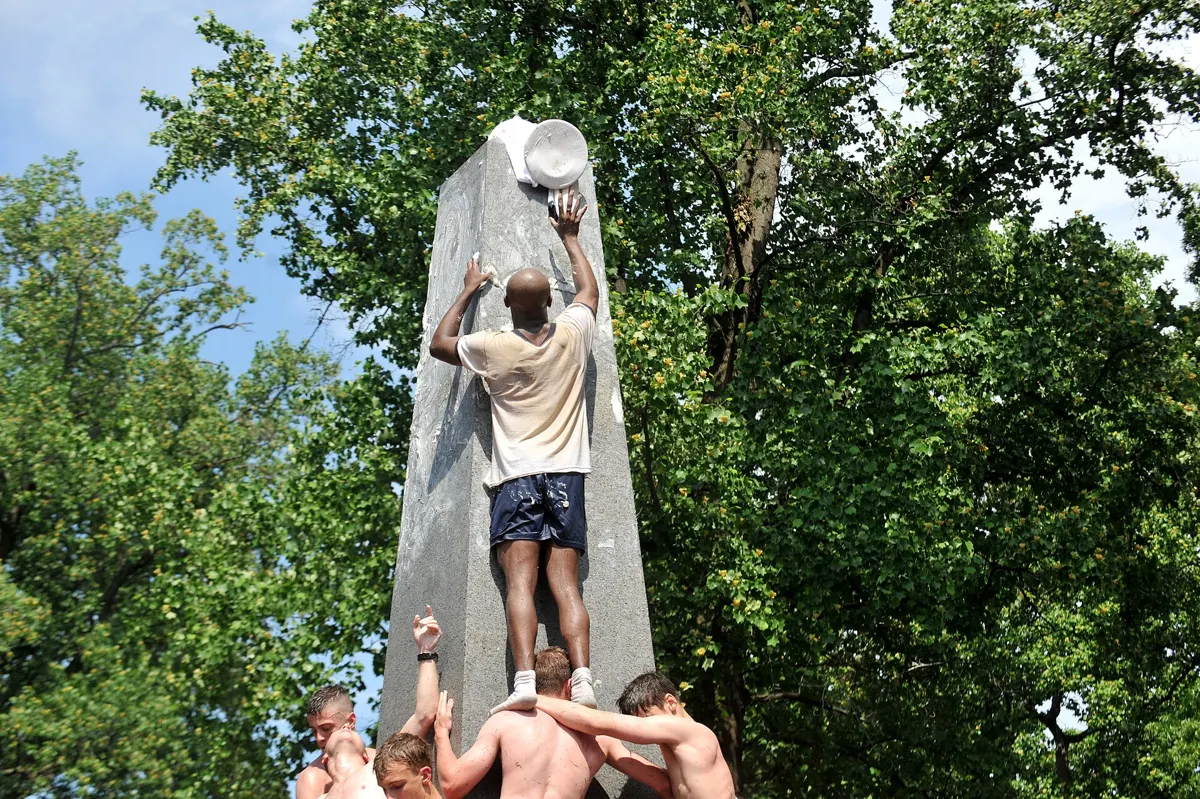
A granite obelisk erected in 1860 for Cmdr. William Lewis Herndon, who went down with his ship in 1857. It is the site of the plebe-year climb (opens in a new tab).
Tecumseh Court
The courtyard in front of Bancroft Hall, named for the bronze figurehead of Tecumseh that midshipmen salute and decorate before big games. Noon meal formations are held here.
Memorial Hall
A ceremonial room in Bancroft Hall honoring graduates killed in operational service. It displays the “Don't Give Up the Ship” battle flag.
Mahan Hall
Completed in 1907 as the academy library and named for strategist Alfred Thayer Mahan.
Dahlgren Hall
Begun in 1899 and completed in 1903 as an armory; named for Rear Adm. John Dahlgren, the ordnance pioneer.
Nimitz Library
The main library, completed in 1973 and named for Fleet Adm. Chester W. Nimitz.
Rickover Hall
The engineering complex completed in 1975, named for Adm. Hyman G. Rickover.
Wesley Brown Field House
Athletic and training facility dedicated on May 10, 2008, honoring the academy's first Black graduate.
Uriah P. Levy Center and Jewish Chapel
Dedicated in September 2005, it houses the academy's ethics center and a chapel named for Commodore Uriah P. Levy.
Naval Academy Museum (Preble Hall)
The museum building, dedicated in 1939 and later named Preble Hall, holds collections of ship models, flags, paintings and artifacts of naval history.
Tripoli Monument
Carved in Italy to honor officers killed in the war with Tripoli in 1804, it has stood at the academy since 1860. The academy calls it one of the earliest military memorials in the United States.
Hopper Hall
Academic building for cyber operations and computer science, named for Rear Adm. Grace Hopper and opened in 2020.
Navy-Marine Corps Memorial Stadium
Navy's football stadium, dedicated on Sept. 26, 1959, to those who served in the Navy and Marine Corps.
Naval Academy traditions
Many traditions mark a midshipman's progress from the first day of Plebe Summer to the hat toss four years later.
- Induction Day
- On I-Day each summer, incoming plebes are issued uniforms, get haircuts, learn to salute and take the oath of office in Tecumseh Court before saying goodbye to their families.
- Plebe Summer
- Roughly seven weeks of military indoctrination, physical training, sailing and drill run largely by first-class midshipmen.
- Plebe year
- First-year midshipmen memorize professional knowledge, observe strict rules and serve the upper classes, earning privileges as the year goes on.
- Sea Trials
- A demanding day of physical and team challenges near the end of plebe year that tests what the class has learned together.
- Herndon Monument climb
- To end plebe year, the class forms a human pyramid to remove a white “dixie cup” cap from the top of the greased 21-foot monument and replace it with an upperclassman's cover. Greasing the monument began in 1955.
- Noon meal formation
- The Brigade assembles by company for formation before lunch, a ritual visitors can watch on many weekdays.
- The Brigade of Midshipmen
- The entire student body forms a single military unit led by midshipmen, giving each class increasing leadership responsibility.
- Service assignment
- In the fall of senior year, midshipmen learn whether they will join surface warfare, submarines, aviation, special warfare, the Marine Corps or another community.
- Commissioning Week and the hat toss
- Known as June Week until 1979, Commissioning Week ends with graduation. Since graduation-day commissioning began in 1912, new officers have thrown their midshipman covers into the air.
- Navy Blue and Gold
- The academy's alma mater, sung by both teams after every Army–Navy Game. The loser's song is sung first and the winner's second.
- Bill the Goat
- A goat first served as Navy's mascot in 1893. Live goats and costumed mascots still appear at games, and Bill has been the target of Army spirit missions.
- The Honor Concept
- The academy's honor standard (opens in a new tab) begins, “Midshipmen are persons of integrity: They stand for that which is right,” and rejects lying, cheating and stealing.
- Beat Army
- Game week brings spirit events, decorated buildings, videos and the march-on at the Army–Navy Game. See the traditions and pranks pages for more.
Game-day rituals shared by both academies are explained in Army–Navy traditions, the March-On, the prisoner exchange and Sing Second.
Academics and military training
The academy combines a four-year college education with full-time military training. Every midshipman earns a Bachelor of Science degree, whatever the major, because the core curriculum requires substantial work in engineering, mathematics and science alongside the humanities. In the 2025-26 academic year the academy offered 23 majors, and its student-faculty ratio was 8 to 1.
What midshipmen study
Majors fall into three broad groups: engineering and weapons, such as aerospace, mechanical and naval architecture; mathematics and science, including cyber operations, computer science, oceanography and physics; and humanities and social sciences, such as history, political science and economics. All midshipmen also complete courses in leadership, ethics, naval science and navigation.
Professional training
Summers are spent in training: sailing and seamanship, fleet familiarization aboard ships and with aviation, submarine and Marine Corps units, and leadership roles training the next class of plebes. Midshipmen hold leadership positions in the Brigade itself, which is organized like a military unit and run largely by the senior class.
In the fall of their final year, midshipmen receive their service assignments — surface warfare, submarines, aviation, special warfare, the Marine Corps and other communities — matched to the services' needs, the midshipman's performance and personal preference. The Class of 2026 received its assignments on Nov. 20, 2025.
Cost and service obligation
There is no tuition. The government covers tuition, room, board and medical and dental care, and midshipmen receive monthly pay. In return, graduates ordinarily serve at least five years on active duty. Applicants generally need a nomination, usually from a member of Congress, and must be U.S. citizens, unmarried with no dependents, and at least 17 but not yet 23 on July 1 of the year they enter.
That combination — a no-cost degree, a guaranteed job as an officer and a binding service commitment — is what most separates the academy from a civilian university. Unlike West Point, which commissions officers into the Army, Annapolis commissions officers into two services, the Navy and the Marine Corps, and a small number of graduates each year enter the Air Force or Space Force.
Navy athletics and football history
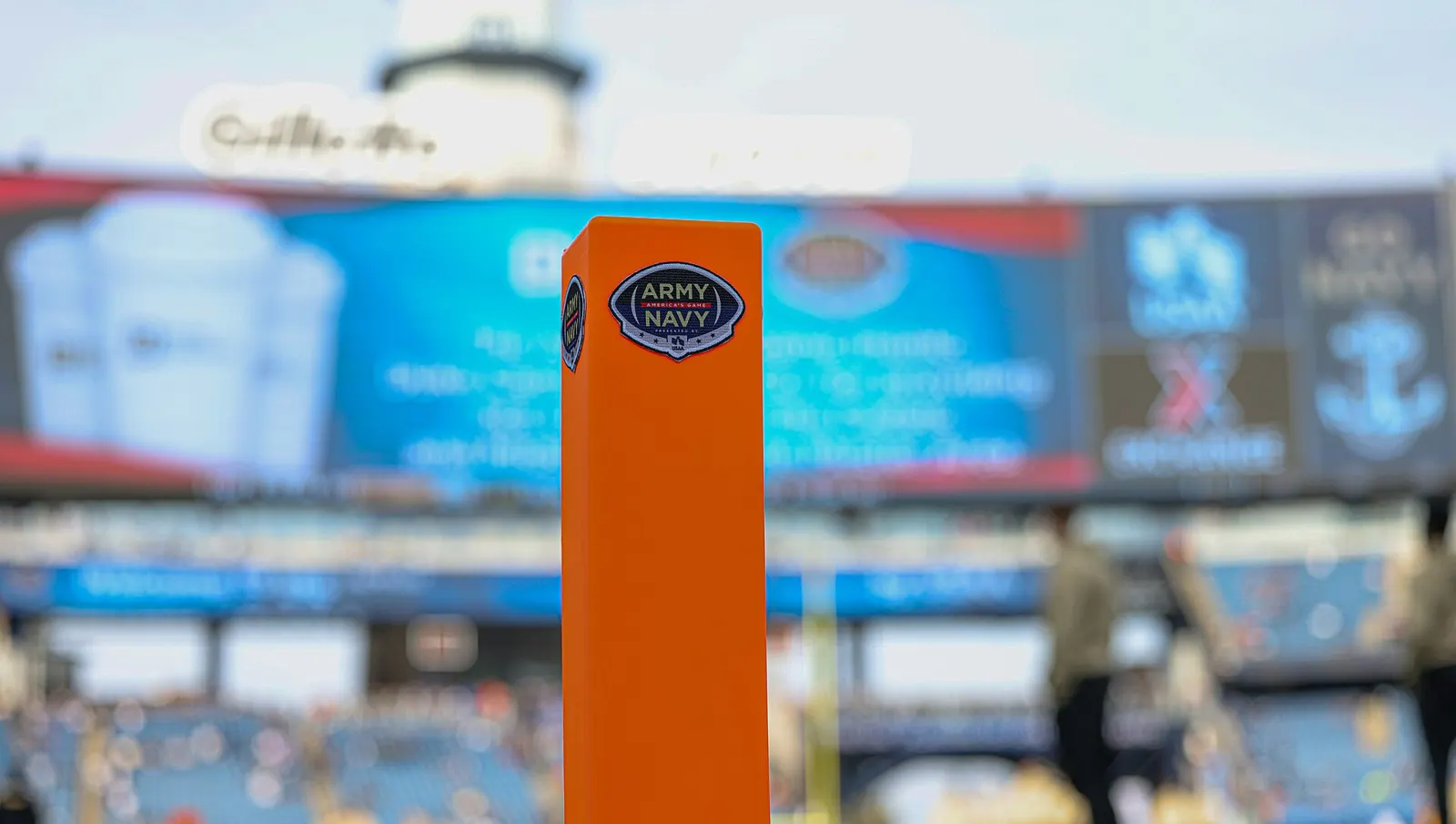
Physical competition has been part of academy life since the 19th century, and every midshipman is expected to compete in intercollegiate, club or intramural sports. Football is the most visible program, and the Army–Navy Game its biggest stage.
From 1879 to the Army–Navy Game
Navy played its first football game on Dec. 11, 1879, a scoreless tie with the Baltimore Athletic Club. The first Army–Navy Game followed on Nov. 29, 1890, at West Point, where Navy won 24-0. The rivalry has been played most years since, usually in Philadelphia, and has become one of the most watched traditions in college football.
Great eras and honors
The academy recognizes a 1926 national championship from an unbeaten season. Navy produced two Heisman Trophy winners in four years: halfback Joe Bellino in 1960 and quarterback Roger Staubach in 1963, when Navy finished No. 2 and played for the national title in the Cotton Bowl. Ken Niumatalolo, head coach from 2007 to 2022, is the program's winningest coach, and Navy beat Army 14 consecutive times from 2002 to 2015, the longest streak in the series.
Navy played as an independent for more than a century before joining the American Athletic Conference in football in 2015; most other varsity teams compete in the Patriot League. Under head coach Brian Newberry, Navy beat Army 17-16 on Dec. 13, 2025, finishing 11-2 with a No. 23 national ranking and a second straight Commander-in-Chief's Trophy.
Navy-Marine Corps Memorial Stadium
Navy's home field was dedicated on Sept. 26, 1959, as a memorial to those who served in the Navy and Marine Corps. Battle names from Navy and Marine Corps history are displayed around the stadium.
Naval Academy statistics
Enrollment and admissions figures change every year. Each figure below is labeled with the class or academic year it describes; historical totals are the academy's own counts.
| Measure | Figure | Period |
|---|---|---|
| Midshipmen enrolled | About 4,400 | 2025-26 academic year |
| Academic majors | 23 | 2025-26 academic year |
| Student-faculty ratio | 8 to 1 | 2025-26 academic year |
| Applications | 16,814 | Class of 2030 |
| Entering plebes (projected at Induction Day) | 1,204, including 14 international students and 56 prior-enlisted service members | Class of 2030, June 2026 |
| Graduates | 1,059 | Class of 2026, May 2026 |
| Commissioned into the Navy | 775 | Class of 2026 |
| Commissioned into the Marine Corps | 267 | Class of 2026 |
| Other commissions | 2 Space Force, 1 Air Force | Class of 2026 |
| International graduates | 12 | Class of 2026 |
| Medal of Honor recipients among graduates | 73 | Academy count, 2026 |
| Graduates selected as NASA astronauts | 56 | Academy count, 2026 |
| Heisman Trophy winners | 2 (Joe Bellino, 1960; Roger Staubach, 1963) | Through 2025 season |
Academy age: founded in 1845. Figures are not estimates; where an academy publishes no current figure, none is shown.
Naval Academy vs. West Point
The two academies share a mission — educating officers — and a rivalry, but differ in age, services, traditions and campus life.
| Category | Naval Academy | West Point |
|---|---|---|
| Year founded | 1845 (Oct. 10) | 1802 (March 16) |
| Location | Annapolis, Maryland | West Point, New York |
| Service focus | Navy and Marine Corps | Army |
| Student designation | Midshipman | Cadet |
| Student body | Brigade of Midshipmen | Corps of Cadets |
| Athletic nickname | Midshipmen | Black Knights |
| Mascot | Goat (Bill), since 1893 | Mule, since 1899 |
| Colors | Navy blue and gold | Black, gold and gray |
Frequently asked questions
When was the Naval Academy founded?
The academy opened on Oct. 10, 1845, as the Naval School at Fort Severn in Annapolis. It was renamed the United States Naval Academy in 1850.
Who founded the Naval Academy?
Navy Secretary George Bancroft. He arranged the transfer of Fort Severn from the Army and opened the school without a new act of Congress. Cmdr. Franklin Buchanan was its first superintendent.
Why is the Naval Academy in Annapolis?
Fort Severn was available for transfer from the Army, and the site offered protected water on the Severn River for boat training, existing buildings and distance from the distractions of a large port city.
What is the Naval Academy known for?
Developing officers for the Navy and Marine Corps through a demanding Bachelor of Science program, military training and an honor-based culture. Its graduates include a president, Nobel laureates, astronauts and Heisman Trophy winners.
How difficult is admission?
Very competitive. For the Class of 2030, the academy received 16,814 applications and projected 1,204 entering plebes. Most applicants also need a nomination, usually from a member of Congress.
How much does it cost to attend?
Nothing in tuition. The government pays for tuition, room, board and medical and dental care, and midshipmen receive monthly pay. Graduates repay that investment with military service.
How many midshipmen attend?
About 4,400 midshipmen in the 2025-26 academic year.
What is Plebe Summer?
The roughly seven-week training program that follows Induction Day, introducing new midshipmen to military life, physical training, sailing and academy standards.
What is the Herndon Monument climb?
The end-of-plebe-year tradition in which the class works together to climb the greased 21-foot Herndon Monument, remove a plebe cap from the top and replace it with an upperclassman's cover.
Why is the Navy mascot a goat?
Goats were traditionally kept aboard ships, and a goat first served as Navy's football mascot in 1893. The tradition stuck, and the goats have long been known as Bill.
What is the Naval Academy's motto?
Ex Scientia Tridens, which the academy translates as “From Knowledge, Sea Power.”
What military branches do graduates join?
Most become Navy ensigns or Marine Corps second lieutenants. In the Class of 2026, 775 graduates were commissioned in the Navy, 267 in the Marine Corps, two in the Space Force and one in the Air Force.
How long must graduates serve?
Graduates ordinarily serve at least five years on active duty; some specialties, such as aviation, require longer.
Which presidents attended the Naval Academy?
Jimmy Carter, Class of 1947, is the only academy graduate to become president.
Which Naval Academy graduates became astronauts?
The academy counts 56 graduates selected as NASA astronauts, including Alan Shepard, Jim Lovell, Charles Bolden and Wendy Lawrence.
When did Navy first play Army in football?
On Nov. 29, 1890, at West Point. Navy won 24-0.
Related Army–Navy history
Planning a trip to the game? See the 2026 Army–Navy Game, the 2027 Army–Navy Game, game-weekend events, every Army–Navy result, NFL alumni and the rivalry timeline.