Overview and quick facts
The United States Military Academy was established on March 16, 1802, when President Thomas Jefferson signed the law creating it at West Point, New York — a bluff above a sharp bend in the Hudson River that the Continental Army had fortified and held since 1778. It is the oldest of the nation's federal service academies, and the academy calls West Point the oldest continuously occupied post of the Regular Army.
Today about 4,400 cadets make up the Corps of Cadets. They study for a Bachelor of Science degree in one of 36 majors (opens in a new tab), train as soldiers each summer and graduate as second lieutenants in the Army, with a commitment of five years on active duty and three more in the reserves. More than 80,000 men and women have graduated since 1802.
Those graduates — the Long Gray Line — include two presidents, the commanders of the Union and Confederate armies, the generals who led American forces in both world wars, astronauts who flew to the moon and three Heisman Trophy winners. West Point also hosted the first Army–Navy Game in 1890 (opens in a new tab).
- Official name
- United States Military Academy (USMA)
- Common name
- West Point
- Founded
- March 16, 1802
- Revolutionary War post
- Occupied and fortified from 1778
- Founding president
- Thomas Jefferson
- Location
- West Point, New York, in the Hudson Valley
- Motto
- Duty, Honor, Country
- Student body
- Corps of Cadets
- Athletic nickname
- Black Knights
- Colors
- Black, gold and gray
- Mascot
- Mule (since 1899)
- Degree
- Bachelor of Science
- Commission
- Second lieutenant, U.S. Army
- Distinction
- Oldest U.S. service academy
- Football conference
- American Athletic Conference (since 2024)
- Official website
- westpoint.edu
This independent guide is not affiliated with or endorsed by the United States Military Academy. Current enrollment and admissions figures are in the statistics section, labeled by year.
West Point before the academy: The Revolutionary War
Long before it was a school, West Point was a fortress — and the reason was geography. Just south of the post, the Hudson River narrows and bends sharply around the point, with strong currents and shifting winds that forced sailing ships to slow down. Whoever held the high ground there could control traffic on the river that linked New York City to the interior and separated New England from the rest of the colonies.
British strategy early in the war aimed to seize the Hudson and cut the rebellion in two. George Washington understood the danger; the West Point Association of Graduates quotes him describing the post as the “key to the continent.”
Kosciuszko's fortress
In 1778 Washington selected Polish engineer Thaddeus Kosciuszko to design the defenses. Over the next two years soldiers built a network of forts, batteries and redoubts on the plain and the hills above it, including Fort Clinton on the point itself and Fort Putnam on the high ground to the west, which protected the lower works from attack by land. Washington moved his headquarters to West Point in 1779.
The Great Chain
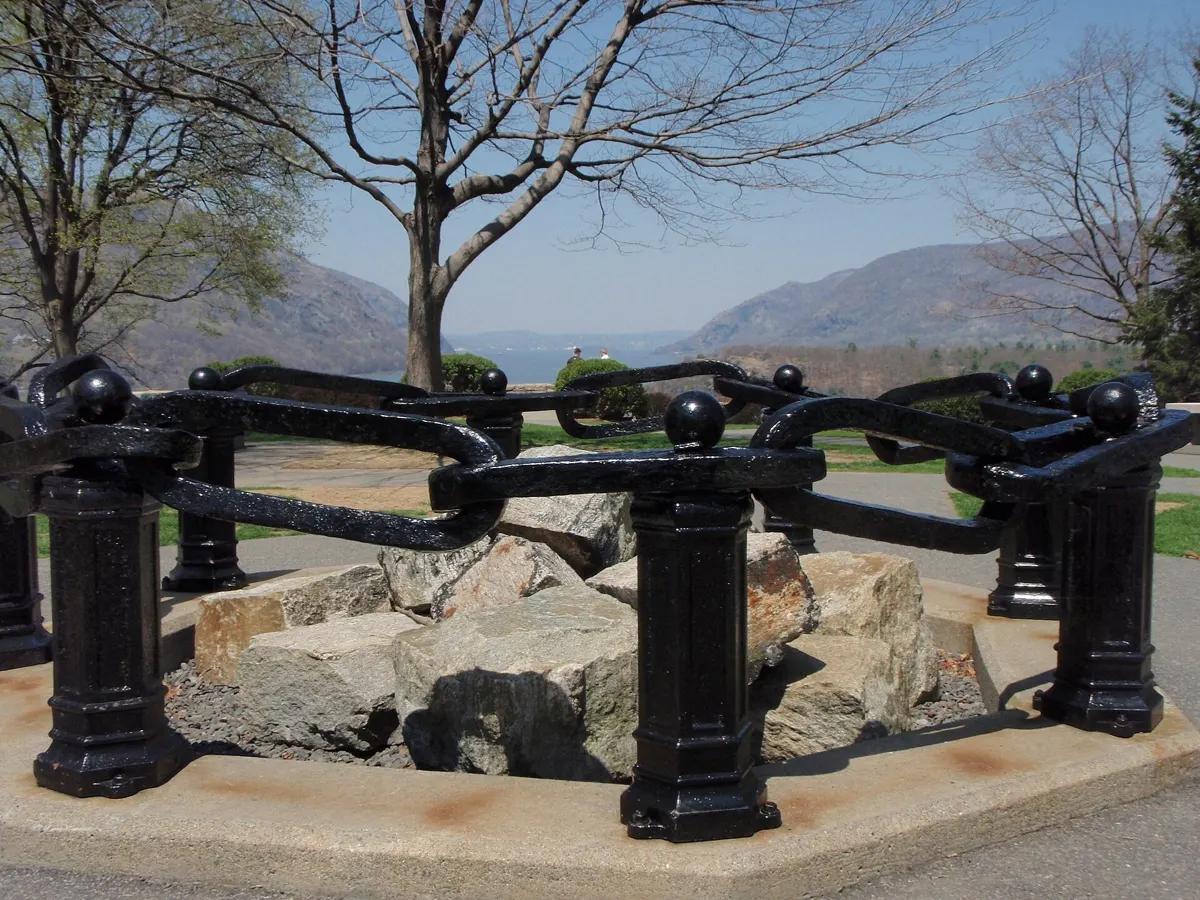
On April 30, 1778, the Continental Army stretched a massive iron chain (opens in a new tab), floated on log rafts, across the Hudson from West Point to Constitution Island. Combined with the guns above it, the chain was designed to stop any British warship trying to force its way upriver. It was removed each winter and reinstalled in the spring, and the British never tested it. Surviving links are displayed today at Trophy Point.
Benedict Arnold's betrayal
In 1780 Maj. Gen. Benedict Arnold, a hero of Saratoga, took command of West Point and secretly arranged to surrender it to the British for money and a commission. The plot collapsed in September 1780, when British Maj. John André (opens in a new tab) was captured carrying documents that exposed it. Arnold escaped to a British ship and became a byword for treason; André was hanged as a spy in October.
West Point was never captured. The fortress remained in American hands throughout the war and afterward became a permanent military post; Congress appropriated money to buy the land in 1790. The Revolutionary War post and the academy founded there in 1802 are separate chapters, but the first made the second possible.
Founding of the U.S. Military Academy
After independence, Washington, Alexander Hamilton and others argued that the young nation needed its own school to train artillerists and engineers instead of relying on foreign experts like Kosciuszko. Opponents feared a professional officer class. Thomas Jefferson, initially skeptical, came to support a small academy that would produce engineers useful in peace as well as war.
On March 16, 1802, Jefferson signed the Military Peace Establishment Act (opens in a new tab), which created a Corps of Engineers stationed at West Point that would “constitute a military academy.” Jonathan Williams was the first superintendent, and Joseph G. Swift, Class of 1802, became the academy's first graduate; he later returned as its third superintendent. Instruction in the early years was irregular, with small classes and little consistency in admission or graduation standards.
Sylvanus Thayer and the modern academy
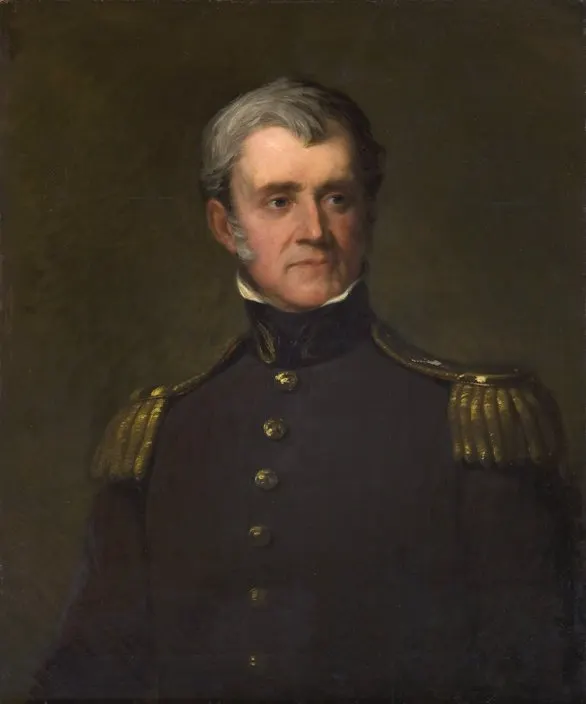
Sylvanus Thayer (opens in a new tab), Class of 1808, became the academy's fifth superintendent in 1817 and stayed until 1833. Having studied French military schools, he rebuilt West Point around a demanding four-year curriculum dominated by mathematics, science and civil and military engineering.
Thayer divided cadets into small sections, required daily recitation and graded every cadet in every subject, publishing an order of merit that determined branch assignments. He organized the Corps of Cadets into a disciplined military unit with its own officers and emphasized honor and personal responsibility. The academy still calls him the “Father of the Military Academy,” and small-section, daily-preparation teaching is still known as the Thayer Method.
The result was the country's first school of engineering. Graduates surveyed boundaries, built forts, roads and railroads, and taught engineering across the country; George Washington Whistler, Class of 1819, was chosen by the czar of Russia to build the railroad from Moscow to St. Petersburg. In 1835 West Point cadets introduced the class ring (opens in a new tab), the first such tradition in the United States.
West Point through American history
From the Mexican-American War to the war on terrorism, West Point graduates have led the Army in every American conflict. That history includes failures and injustices as well as achievements, and both are part of the record.
1802–1860: Engineers and the Mexican-American War
The early academy's engineers mapped the West and built much of the nation's infrastructure; Benjamin Bonneville, Class of 1815, explored the Great Salt Lake region and the rivers of the Northwest. The Mexican-American War of 1846-1848 was the first major test of the graduates as a group. Junior officers such as Ulysses S. Grant, Robert E. Lee and Thomas J. Jackson gained battlefield experience that would shape the Civil War a generation later. Lee himself returned as superintendent from 1852 to 1855.
1861–1865: An academy divided
Secession split the Long Gray Line. Many Southern graduates resigned their commissions to fight for the Confederacy, a rebellion launched to preserve slavery, while most graduates remained loyal to the Union. According to the academy, West Point graduates fought on both sides in 55 of 60 major Civil War battles and commanded one side in the other five.
Union victory was led in large part by graduates: Ulysses S. Grant, Class of 1843, rose to general in chief of the Union armies; William T. Sherman, Class of 1840, captured Atlanta and marched to the sea; George G. Meade, Class of 1835, defeated Lee at Gettysburg; and George H. Thomas, Class of 1840, earned the nickname “Rock of Chickamauga.” On the Confederate side, Lee, Class of 1829, commanded the Army of Northern Virginia and Jackson, Class of 1846, was killed at Chancellorsville. Jefferson Davis, Class of 1828, was the Confederacy's president. The war's legacy at West Point remains contested; see the 2001–2026 section below.
1865–1900: Reconstruction, the frontier and integration
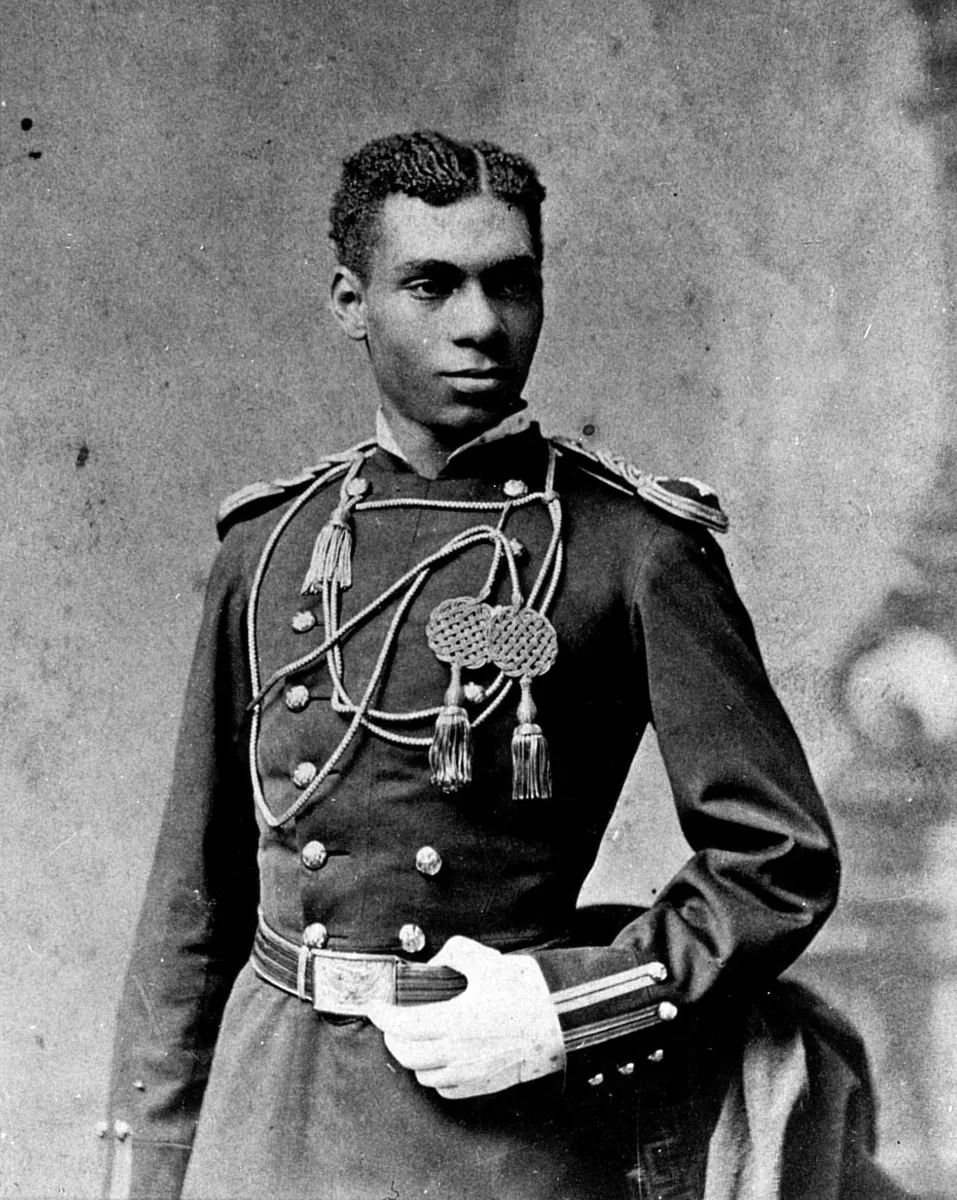
After the war, graduates served in Reconstruction and in the Army's campaigns against Native American nations in the West, including George A. Custer, Class of 1861, killed at the Little Bighorn in 1876. Between 1870 and 1889, 12 Black cadets (opens in a new tab) entered the academy, beginning with James Webster Smith in 1870; they faced ostracism and abuse, and only three graduated. Henry O. Flipper became the first Black graduate in 1877 and served with the 10th Cavalry, one of the Buffalo Soldier regiments. John Hanks Alexander followed in 1887 and Charles Young in 1889; Young became the first Black colonel in the Regular Army.
Cadet Dennis Mahan Michie organized the academy's first football team and challenged the Naval Academy; on Nov. 29, 1890, Navy won the first Army–Navy Game 24-0 on the Plain. Army returned the favor the next year, and a mule first appeared as the team's mascot at the 1899 game.
1900–1945: World wars and the class the stars fell on
The academy celebrated its centennial in 1902 and rebuilt in a dramatic Gothic Revival style; the new Cadet Chapel was completed in 1910. In World War I, John J. Pershing, Class of 1886, commanded the American Expeditionary Forces in France and later received the rank of general of the armies. Douglas MacArthur, Class of 1903, returned as superintendent from 1919 to 1922 and pushed to modernize the curriculum and expand athletics. Michie Stadium (opens in a new tab) opened in 1924.
In World War II, graduates commanded American forces around the world. Of the 164 graduates in the Class of 1915, 59 reached the rank of brigadier general or higher, the most of any class, earning it the name “the class the stars fell on.” Its members included Dwight D. Eisenhower, supreme commander of Allied forces in Europe, and Omar N. Bradley, who commanded the 12th Army Group. George S. Patton Jr., Class of 1909, led the Seventh and Third armies, and Henry H. “Hap” Arnold, Class of 1907, built the Army Air Forces. At home, Army football won three consecutive national championships from 1944 to 1946.
1945–1975: Cold War, Korea and Vietnam
Graduates led in Korea, where Matthew Ridgway, Class of 1917, took command of United Nations forces, and in Vietnam, where many young officers from the Long Gray Line were killed. Bradley became the first chairman of the Joint Chiefs of Staff in 1949, and Eisenhower was elected president in 1952.
In 1951 the academy expelled 90 cadets, including 37 football players, for cheating on exams — the “cribbing scandal” that gutted Earl Blaik's football team and became one of the most significant honor-code cases in its history. Graduates also joined the space program: Frank Borman, Class of 1950, commanded Apollo 8, the first crewed mission to orbit the moon, and Buzz Aldrin, Class of 1951, walked on the moon with Apollo 11. Eisenhower Hall opened in 1974.
1976–2000: Women in the Corps
In July 1976, 119 women entered West Point with the Class of 1980, after a 1975 law opened the service academies to women. That same year an electrical engineering take-home exam led to a large cheating scandal and a thorough review of the honor system. In 1980, 62 women graduated with the first coeducational class. Kristin Baker became the first woman to serve as first captain, the highest-ranking cadet, in 1989.
Roscoe Robinson Jr., Class of 1951, became the Army's first Black four-star general in 1982. In the 1991 Gulf War, H. Norman Schwarzkopf, Class of 1956, commanded the coalition forces that drove Iraq from Kuwait.
2001–2026: The war on terrorism and today's academy
After the Sept. 11 attacks, graduates led soldiers in Afghanistan, Iraq and counterterrorism missions worldwide, and many were killed in action. The academy expanded cyber and technology education, and Jefferson Hall, its library and learning center, opened in 2008.
The academy has also revisited how it commemorates the Confederacy. Following recommendations of the congressionally created Naming Commission, Lee Barracks became Ridgway Barracks. In 2025 the academy reversed some changes: The Associated Press reported in September 2025 that a portrait of Lee in Confederate uniform had been returned to display, with restoration of a removed bust planned. Lt. Gen. Steven Gilland became the 61st superintendent in 2022, and Lt. Gen. James B. Bartholomees III became the 62nd in August 2026. Army football joined the American Athletic Conference in 2024 and won the league title in its first season.
West Point timeline
Dated milestones from the Revolutionary War fortress to the most recent class. Expand each era for details.
1778–1801: The Revolutionary War fortress (5)
- Washington selects Thaddeus Kosciuszko to design West Point's fortifications.
- The Great Chain is stretched across the Hudson to Constitution Island.
- Washington establishes his headquarters at West Point.
- Benedict Arnold's plot to surrender West Point is exposed with the capture of Maj. John André.
- Congress appropriates money to buy West Point from Stephen Moore.
1802–1860: Founding and the Thayer era (6)
- President Thomas Jefferson signs the law establishing the academy.
- Joseph G. Swift becomes the first graduate.
- Sylvanus Thayer becomes superintendent; the West Point Band is authorized on June 16; the post cemetery is established.
- Cadets adopt the class ring, the first in the United States.
- The Old Cadet Chapel is completed.
- Robert E. Lee serves as superintendent.
1861–1899: Civil War, integration and football (6)
- By the academy's count, graduates fight on both sides in 55 of 60 major Civil War battles.
- James Webster Smith becomes the first Black cadet; he did not graduate.
- Henry O. Flipper becomes the first Black graduate.
- Charles Young graduates, the third Black graduate of the 19th century.
- Navy beats Army 24-0 at West Point in the first Army–Navy Game.
- A mule appears as Army's mascot at the Army–Navy Game.
1900–1945: Modernization and world wars (6)
- The Cadet Chapel is completed; the Old Cadet Chapel is moved to the cemetery.
- The Class of 1915 graduates; 59 of its 164 members later become generals.
- Douglas MacArthur serves as superintendent.
- Michie Stadium opens with a 17-0 win over St. Louis University.
- Army football wins three consecutive national championships.
- Doc Blanchard wins the Heisman Trophy; Glenn Davis follows in 1946.
1946–1975: The Cold War (5)
- Ninety cadets, including 37 football players, are expelled in the cribbing scandal.
- Pete Dawkins wins the Heisman Trophy.
- Frank Borman, Class of 1950, commands Apollo 8, the first crewed flight around the moon.
- Buzz Aldrin, Class of 1951, walks on the moon on Apollo 11.
- Eisenhower Hall is dedicated.
1976–2000: Women in the Corps (4)
- The first 119 women join the Corps of Cadets.
- Sixty-two women graduate with the first coeducational class.
- Roscoe Robinson Jr., Class of 1951, becomes the Army's first Black four-star general.
- Kristin Baker becomes the first female first captain.
2001–2026: The modern academy (8)
- Jefferson Hall Library and Learning Center is completed.
- Lt. Gen. Steven Gilland becomes the 61st superintendent.
- In its first conference season, Army wins the American Athletic Conference title and finishes 12-2.
- A portrait of Robert E. Lee is returned to display, reversing an earlier removal.
- Navy edges Army 17-16 in the 126th Army–Navy Game in Baltimore.
- Nearly 1,000 cadets graduate with the Class of 2026 at Michie Stadium.
- The Class of 2030 reports for Reception Day.
- Lt. Gen. James B. Bartholomees III becomes the 62nd superintendent.
West Point historical firsts and milestones
The record includes discrimination and scandal as well as achievement; entering is noted separately from graduating.
| Date | Milestone | Context |
|---|---|---|
| March 16, 1802 | Academy founded | Jefferson signed the law creating a Corps of Engineers at West Point to serve as a military academy, the first federal service academy. |
| 1802 | First graduate | Joseph G. Swift graduated and was commissioned in the Corps of Engineers; he later served as superintendent. |
| 1817–1833 | Thayer reforms | Sylvanus Thayer's curriculum and discipline made West Point the nation's first engineering school. |
| 1835 | First class ring | West Point cadets introduced the first class ring in the United States, a tradition copied by colleges nationwide. |
| 1870 | First Black cadet | James Webster Smith entered but was dismissed before graduating after years of ostracism. |
| 1877 | First Black graduate | Henry O. Flipper graduated and joined the 10th Cavalry. He was dismissed from the Army in 1882 after a court-martial widely viewed as unjust and was pardoned posthumously in 1999. |
| 1889 | Charles Young graduates | The third Black graduate of the 19th century, Young later became the first Black colonel in the Regular Army. |
| 1951 | Cribbing scandal | Ninety cadets, including 37 football players, were expelled for cheating, the largest honor case of its era. |
| July 20, 1969 | Graduate on the moon | Buzz Aldrin, Class of 1951, became the second person to walk on the moon. |
| July 1976 | First women admitted | 119 women entered with the Class of 1980. |
| 1980 | First women graduates | 62 women graduated with the first coeducational class. |
| 1982 | First Black four-star general | Roscoe Robinson Jr., Class of 1951, became the Army's first Black four-star general. |
| 1989 | First female first captain | Kristin Baker became the highest-ranking cadet in the Corps. |
Famous West Point graduates
Every person below graduated from West Point and is listed with his or her class year. Edgar Allan Poe and painter James McNeill Whistler are sometimes listed as alumni, but both left without graduating and are not included.
U.S. presidents
Class of 1843 · Army
Ulysses S. Grant
Highest rank: General of the Army; posthumously General of the Armies
Led Union armies to victory in the Civil War and served as the 18th president (1869-1877). Approved in 2022 for posthumous promotion to general of the armies.
Class of 1915 · Army
Dwight D. Eisenhower
Highest rank: General of the Army
Supreme commander of Allied forces in Europe in World War II, Army chief of staff and the 34th president (1953-1961). A halfback on the Army football team as a cadet.
Military leaders
Class of 1829 · Army; Confederate Army
Robert E. Lee
Superintendent from 1852 to 1855. Resigned his U.S. commission in 1861 and commanded Confederate forces, becoming general in chief of the Confederate armies. Later president of Washington College.
Class of 1840 · Army
William T. Sherman
Highest rank: General
Captured Atlanta and led the March to the Sea; succeeded Grant as commanding general of the Army.
Class of 1846 · Army; Confederate Army
Thomas J. “Stonewall” Jackson
Confederate lieutenant general and corps commander, killed at Chancellorsville in 1863.
Class of 1880 · Army
George W. Goethals
Army engineer who led construction of the Panama Canal.
Class of 1886 · Army
John J. Pershing
Highest rank: General of the Armies
Commanded the American Expeditionary Forces in World War I.
Class of 1903 · Army
Douglas MacArthur
Highest rank: General of the Army
Superintendent from 1919 to 1922, Army chief of staff, commander in the Pacific in World War II and commander of U.N. forces in Korea.
Class of 1907 · Army; Air Force
Henry H. “Hap” Arnold
Highest rank: General of the Air Force
Pioneer of Army aviation who built the Army Air Forces in World War II.
Class of 1909 · Army
George S. Patton Jr.
Highest rank: General
Competed in the 1912 Olympics and commanded the Seventh and Third armies in World War II.
Class of 1915 · Army
Omar N. Bradley
Highest rank: General of the Army
Commanded the 12th Army Group in Europe and became the first chairman of the Joint Chiefs of Staff.
Class of 1917 · Army
Matthew B. Ridgway
Highest rank: General
Led airborne forces in World War II, commanded U.N. forces in Korea and served as Army chief of staff. Ridgway Barracks is named for him.
Class of 1951 · Army
Roscoe Robinson Jr.
Highest rank: General
Commanded the 82nd Airborne Division and in 1982 became the Army's first Black four-star general.
Class of 1956 · Army
H. Norman Schwarzkopf Jr.
Highest rank: General
Commanded coalition forces in the 1991 Gulf War.
Astronauts
Class of 1950 · Air Force
Frank Borman
Highest rank: Colonel
Commanded Gemini 7 and Apollo 8, the first crewed mission to orbit the moon; later led Eastern Air Lines.
Class of 1951 · Air Force
Buzz Aldrin
Highest rank: Colonel
Lunar module pilot of Apollo 11 and the second person to walk on the moon.
Class of 1952 · Air Force
Edward H. White II
First American to walk in space, in 1965; killed in the Apollo 1 fire in 1967.
Class of 1952 · Air Force
Michael Collins
Command module pilot of Apollo 11 and later director of the National Air and Space Museum.
Athletes and coaches
Class of 1893 · Army
Dennis Mahan Michie
Organized and coached Army's first football team in 1890; killed in the Spanish-American War. Michie Stadium is named for him.
Football profileClass of 1920 · Army
Earl “Red” Blaik
Head coach whose teams won three straight national championships from 1944 to 1946.
Class of 1947 · Army; Air Force
Felix “Doc” Blanchard
“Mr. Inside,” winner of the 1945 Heisman Trophy and a member of three national championship teams.
Football profileClass of 1947 · Army
Glenn Davis
“Mr. Outside,” winner of the 1946 Heisman Trophy and a 10-letter athlete in four sports.
Football profileClass of 1959 · Army
Pete Dawkins
Highest rank: Brigadier general
Won the 1958 Heisman Trophy while serving as class president and brigade commander; Rhodes Scholar.
Football profileClass of 1969 · Army
Mike Krzyzewski
Army basketball captain who coached the Black Knights from 1975 to 1980 before becoming Duke's head coach.
Class of 2010 · Army
Alejandro Villanueva
Army Ranger and Bronze Star recipient who became a Pro Bowl offensive tackle in the NFL.
Football profile
Public service and business
Class of 1808 · Army
Sylvanus Thayer
“Father of the Military Academy,” superintendent from 1817 to 1833; later helped found Dartmouth's Thayer School of Engineering.
Class of 1877 · Army
Henry O. Flipper
First Black graduate; served with the 10th Cavalry and later worked as a civil and mining engineer.
Class of 1947 · Army
Alexander M. Haig Jr.
Highest rank: General
White House chief of staff, NATO supreme allied commander and secretary of state.
Class of 1947 · Air Force
Brent Scowcroft
National security adviser to Presidents Gerald Ford and George H.W. Bush.
Class of 1975 · Army
Lloyd J. Austin III
Highest rank: General
Commanded U.S. Central Command and became the first Black secretary of defense (2021-2025).
Class of 1986 · Army
Mike Pompeo
Graduated first in his class; later CIA director and secretary of state.
More football players from both academies are in notable players and Heisman winners.
Campus and landmarks
The Plain
The parade field at the center of the academy, where the Corps of Cadets drills and holds reviews and where the first Army–Navy Game was played in 1890.
Trophy Point
A scenic overlook above the Hudson that displays surviving links of the Great Chain and captured cannon.
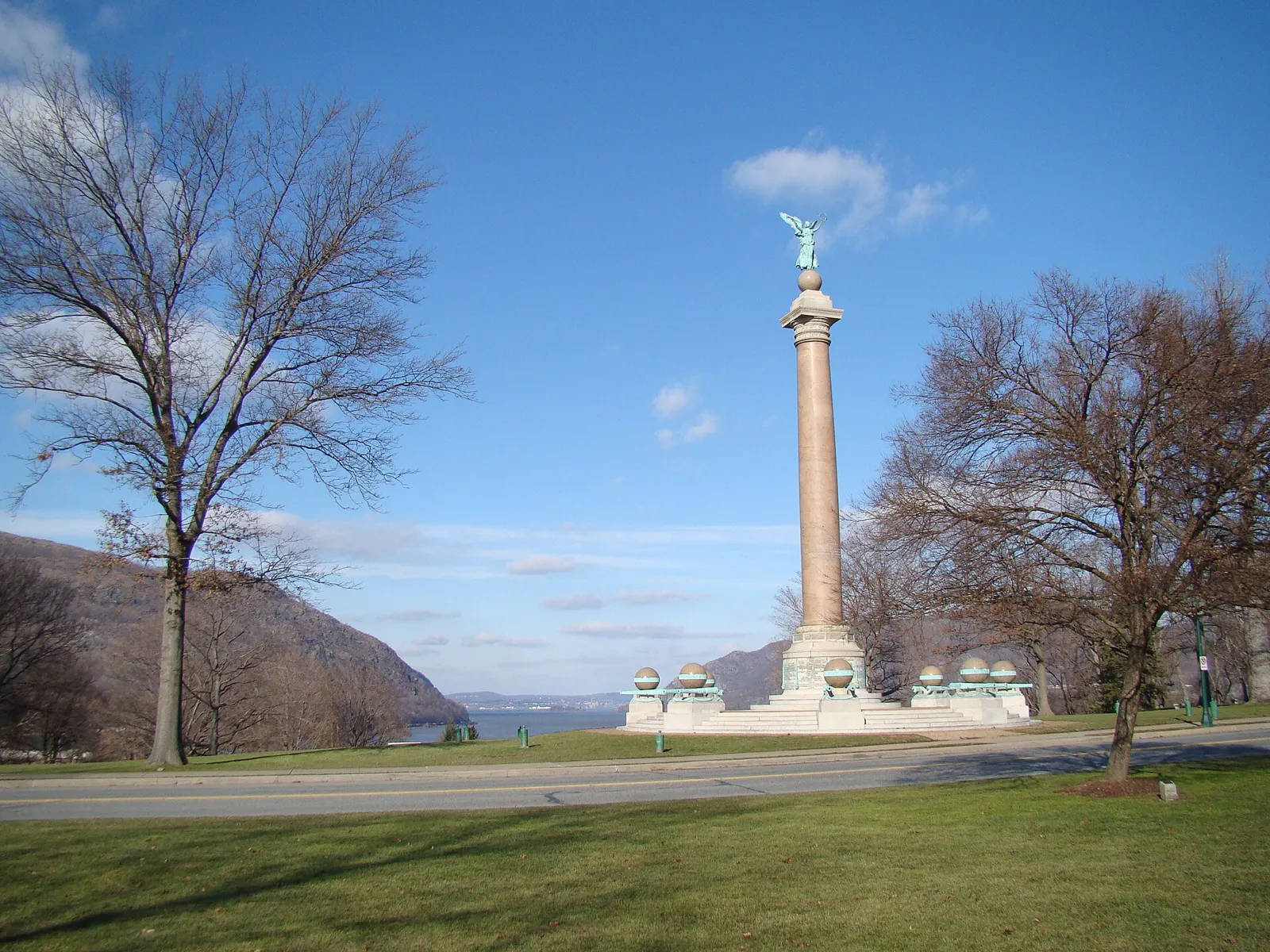
Battle Monument
A granite column at Trophy Point dedicated in 1897 to Regular Army soldiers and officers killed in the Civil War.
West Point Cemetery
Established in 1817; the burial place of Revolutionary War soldiers, Civil War generals, astronauts and graduates of every era.
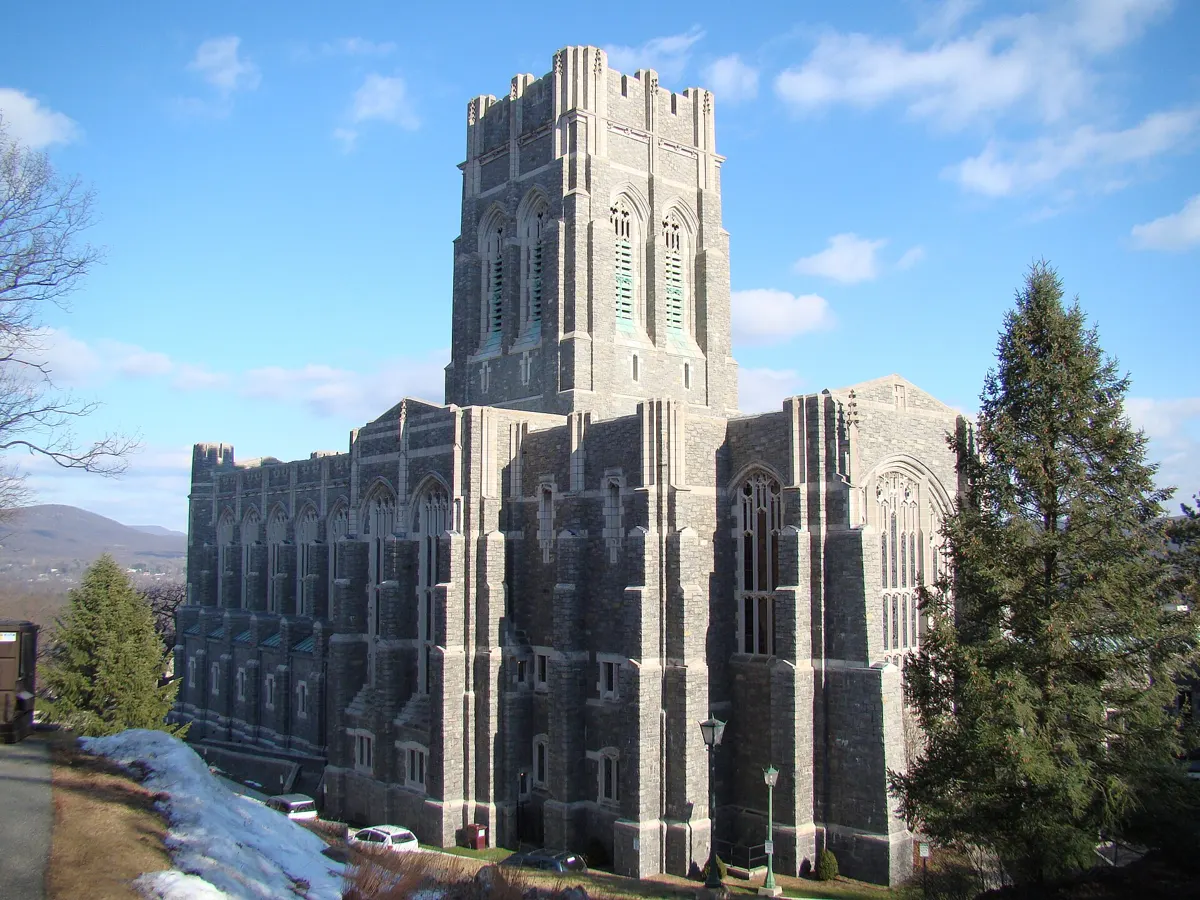
Cadet Chapel
The Gothic Revival chapel completed in 1910. The alumni association describes its organ as the largest chapel pipe organ in the world.
Old Cadet Chapel
Completed in 1836 and moved stone by stone to the cemetery in 1910.
Washington Hall
The cadet mess hall, large enough to seat the entire Corps of Cadets at one meal.
Jefferson Hall
Library and learning center completed in 2008 and named for the president who founded the academy.
Eisenhower Hall
Cadet activities center and theater on the Hudson, dedicated in 1974.
Thayer Hall
Former riding hall converted to classrooms, named for Sylvanus Thayer.
Fort Putnam
Restored Revolutionary War fort on the high ground west of the Plain that protected the lower batteries and redoubts.
Constitution Island
The island across the river where the Great Chain was anchored in 1778.
Michie Stadium
Army's football stadium, built in 1924 and named for Dennis Mahan Michie, Class of 1893.
West Point Museum
The Army museum on post (opens in a new tab) collects and interprets artifacts of the academy, the Army and the profession of arms.
West Point traditions and cadet life
A cadet's 47 months at West Point are marked by milestones from Reception Day to the graduation cap toss.
- The Long Gray Line
- The name for the continuous line of West Point graduates, after the gray cadet uniform.
- Duty, Honor, Country
- The academy motto, made famous by Douglas MacArthur's 1962 farewell address to the Corps.
- The Cadet Honor Code
- “A Cadet will not lie, cheat, steal, or tolerate those who do. (opens in a new tab)” The non-toleration clause, which obliges cadets to act when others violate the code, sets it apart from many honor codes.
- R-Day
- Reception Day, when new cadets report, are in-processed and begin Cadet Basic Training.
- Beast Barracks
- The nickname for Cadet Basic Training, the summer of intense military training that follows R-Day.
- A-Day
- Acceptance Day, when new cadets who complete Cadet Basic Training march back from the field and are formally accepted into the Corps of Cadets.
- The four classes
- Cadets are plebes (fourth class, freshmen), yearlings or “yuks” (third class), cows (second class) and firsties (first class, seniors).
- Class rings and Ring Weekend
- West Point began the American class-ring tradition in 1835. Firsties receive their rings each fall at Ring Weekend.
- 100th Night
- A celebration held about 100 days before graduation, marking the home stretch for the senior class.
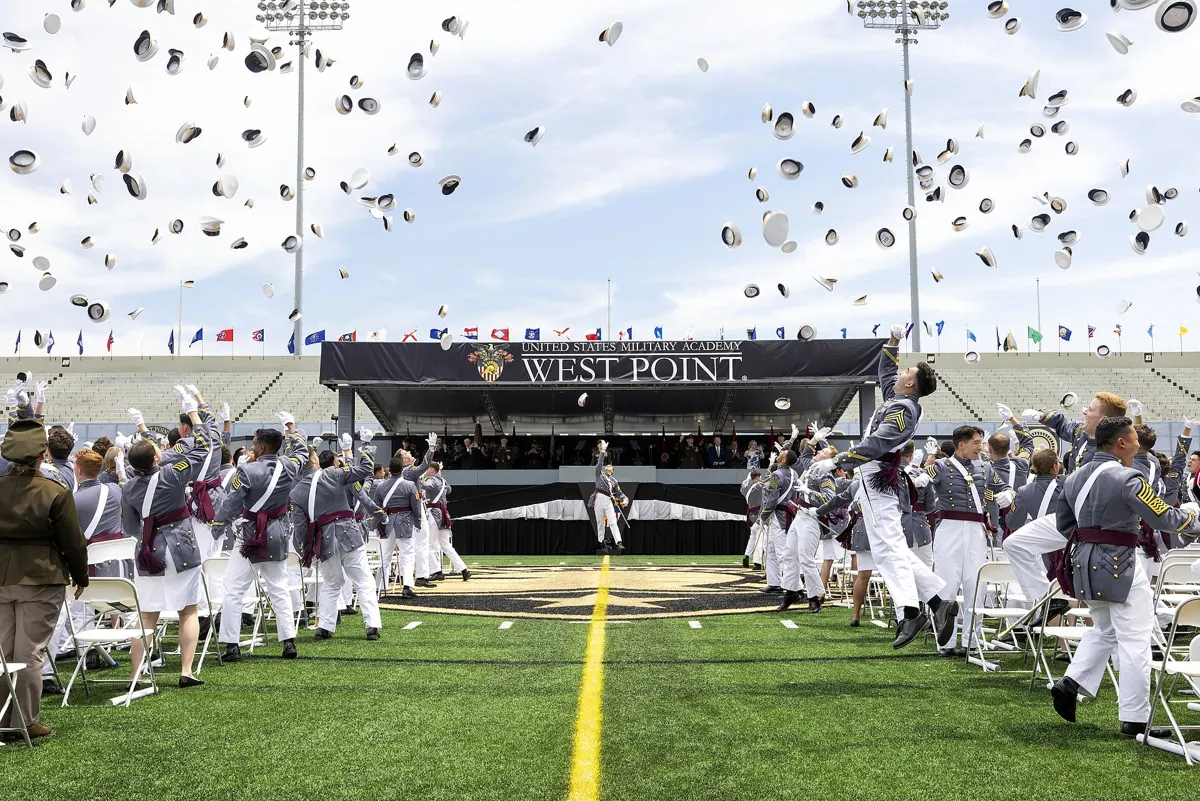
- Graduation and the cap toss
- At the end of graduation, firsties throw their white service caps into the air.
- Army mules
- A mule first served as Army's mascot at the 1899 Army–Navy Game. Mules still appear at games and have been the target of Navy spirit missions.
- Beat Navy
- A year-round slogan that peaks in game week, along with the march-on of the Corps, the prisoner exchange and the singing of both alma maters after the game.
Game-day rituals shared by both academies are explained in Army–Navy traditions, the March-On, the prisoner exchange and Sing Second.
Academics and officer development
West Point develops cadets in three areas at once: academic, military and physical. Every cadet completes a core curriculum in mathematics, science, engineering, history, English, philosophy and leadership, then chooses one of 36 majors, according to the academy. All graduate with a Bachelor of Science degree.
What cadets study
Majors range from civil, electrical and mechanical engineering to computer science, cyber science, history, defense and strategic studies, economics and foreign languages. The Thayer Method of small classes and daily preparation still shapes instruction, with a student-faculty ratio of 7 to 1.
Military training
Military training runs year-round and peaks in the summer. New cadets complete Cadet Basic Training after Reception Day; the following summer cadets attend Cadet Field Training, and upper-class summers include leadership roles training younger cadets, assignments with Army units and advanced schools. In the senior year, cadets choose their Army branches — infantry, armor, aviation, engineers, cyber and others — based on the Army's needs, their performance and their preferences.
Cost and service commitment
Tuition, room, board and medical and dental care are provided at no cost, and cadets receive pay. Graduates are commissioned as Army second lieutenants and owe at least five years of active duty plus three years in a reserve component or the Individual Ready Reserve. Applicants need a nomination (opens in a new tab), most often from a member of Congress, and a nomination does not guarantee admission.
Army football and athletics history
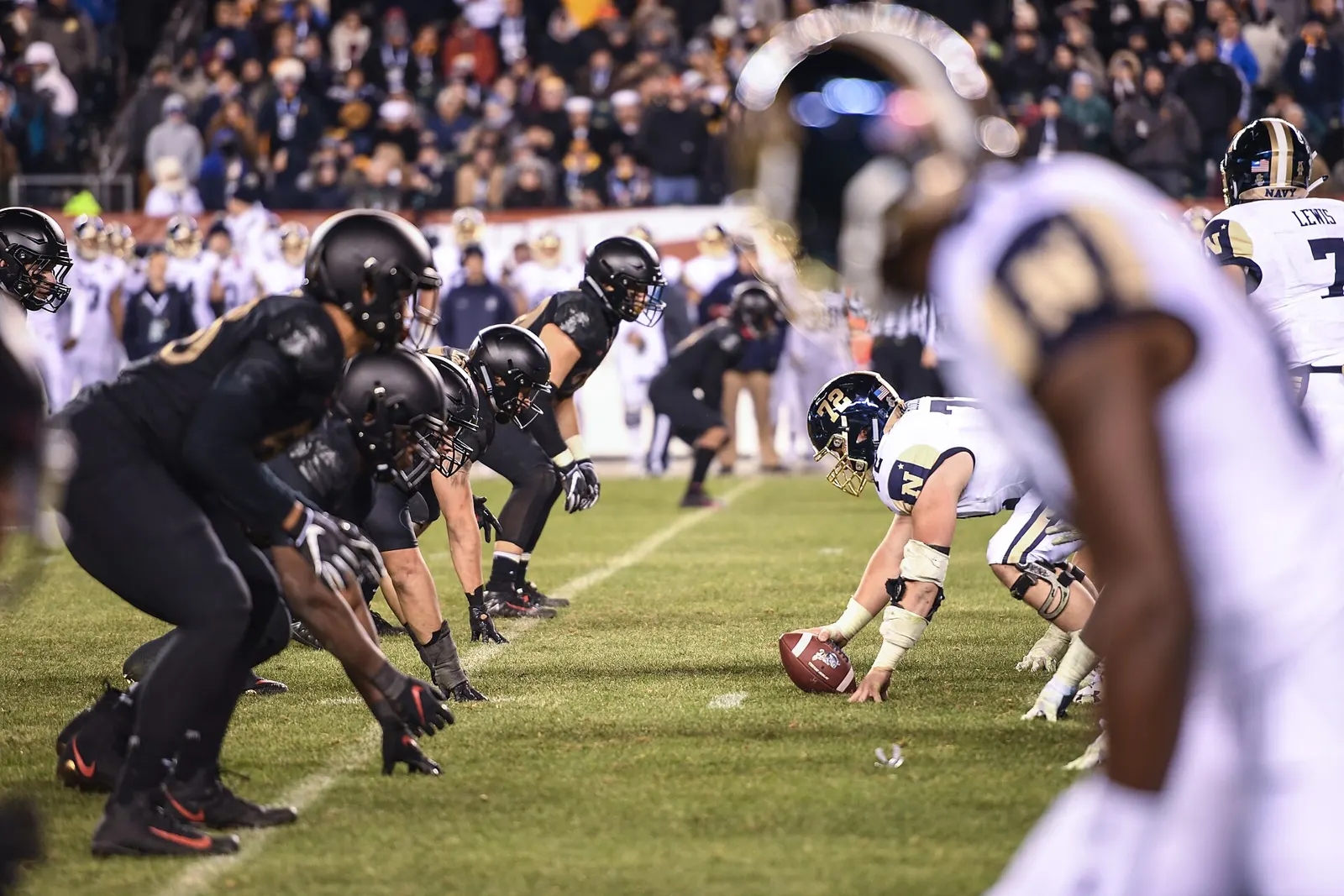
“Every cadet an athlete” has been a West Point principle since MacArthur's superintendency, and cadets compete in intercollegiate, club or intramural sports. Football, the oldest and most visible program, grew directly out of the rivalry with Navy.
Dennis Michie and the first Army–Navy Game
Dennis Mahan Michie, Class of 1893, organized, managed and coached Army's first team in 1890 in response to a challenge from the Naval Academy. Navy won the first meeting 24-0 on Nov. 29, 1890, at West Point. Michie was killed in the Spanish-American War in 1898, and Michie Stadium, opened in 1924 with a 17-0 win over St. Louis University, bears his name.
The 1940s dynasty
Under coach Earl “Red” Blaik, Class of 1920, Army won three straight national championships from 1944 to 1946. Fullback Felix “Doc” Blanchard (opens in a new tab) (“Mr. Inside”) won the 1945 Heisman Trophy and halfback Glenn Davis (opens in a new tab) (“Mr. Outside”) won it in 1946. Pete Dawkins (opens in a new tab), Class of 1959, added a third Heisman in 1958 while also serving as class president and brigade commander and earning a Rhodes Scholarship.
The modern program
Army played as an independent for most of its history before joining the American Athletic Conference in football in 2024. That season it went 12-2, finished 8-0 in league play, beat Tulane 35-14 for the conference championship and defeated Louisiana Tech 27-6 in the Independence Bowl. The Army–Navy Game remains a nonconference game, and Army's annual games with Navy and Air Force decide the Commander-in-Chief's Trophy. Navy won the 126th meeting 17-16 in Baltimore on Dec. 13, 2025.
Basketball also has a West Point connection: Mike Krzyzewski, Class of 1969, captained Army and coached the Black Knights from 1975 to 1980 before becoming Duke's head coach.
West Point statistics
Figures below are labeled with the year or class they describe. The academy publishes some figures without a date; those are marked as academy figures.
| Measure | Figure | Period |
|---|---|---|
| Cadets enrolled | About 4,400 | Academy figure, 2026 |
| Academic majors | 36 | Academy figure, 2026 |
| Student-faculty ratio | 7 to 1 | Academy figure, 2026 |
| Applicants | More than 13,600 | Class of 2030 |
| Expected entering U.S. cadets | More than 1,230, plus about 20 international cadets | Class of 2030, R-Day June 29, 2026 |
| Graduates | Nearly 1,000 | Class of 2026, May 23, 2026 |
| Total graduates since 1802 | More than 80,000 | Academy figure, 2026 |
| Medal of Honor recipients among graduates | 77 | Academy figure, 2026 |
| Graduates selected as NASA astronauts | 21 | As of May 5, 2021 |
| Presidents | 2 (Ulysses S. Grant, Dwight D. Eisenhower) | Through 2026 |
| Heisman Trophy winners | 3 (Doc Blanchard, 1945; Glenn Davis, 1946; Pete Dawkins, 1958) | Through 2025 season |
| Consecutive national championships | 3 (1944, 1945, 1946) | Army Athletics |
Academy age: founded in 1802. Figures are not estimates; where an academy publishes no current figure, none is shown.
West Point vs. Naval Academy
The two academies share a mission — educating officers — and a rivalry, but differ in age, services, traditions and campus life.
| Category | Naval Academy | West Point |
|---|---|---|
| Year founded | 1845 (Oct. 10) | 1802 (March 16) |
| Location | Annapolis, Maryland | West Point, New York |
| Service focus | Navy and Marine Corps | Army |
| Student designation | Midshipman | Cadet |
| Student body | Brigade of Midshipmen | Corps of Cadets |
| Athletic nickname | Midshipmen | Black Knights |
| Mascot | Goat (Bill), since 1893 | Mule, since 1899 |
| Colors | Navy blue and gold | Black, gold and gray |
Frequently asked questions
When was West Point founded?
The U.S. Military Academy was established on March 16, 1802. The Continental Army had occupied and fortified West Point since 1778.
Who founded the U.S. Military Academy?
President Thomas Jefferson signed the law that established it. Jonathan Williams was its first superintendent, and Sylvanus Thayer is known as the Father of the Military Academy.
Why was West Point so important during the Revolutionary War?
Its bluff overlooks a narrow, sharp bend in the Hudson River. Forts and the Great Chain there could block British ships from controlling the river and splitting New England from the other colonies.
What happened at West Point during Benedict Arnold's betrayal?
Arnold took command in 1780 and secretly plotted to surrender the post to the British. The plan was exposed in September 1780 when British Maj. John André was captured; Arnold fled and André was hanged.
Why is it called West Point?
The name comes from the point of land on the west bank of the Hudson where the river bends sharply.
Is West Point the oldest military academy in the United States?
Yes. Founded in 1802, it is the oldest of the federal service academies; the Naval Academy followed in 1845.
What is the academy's motto?
Duty, Honor, Country.
How difficult is admission?
Very competitive. More than 13,600 people applied for the Class of 2030, and about 1,250 were expected to report for Reception Day. Applicants also need a nomination.
Is tuition free?
Yes. Tuition, room, board and medical and dental care are provided, and cadets are paid. Graduates repay the investment with military service.
What is Beast Barracks?
The traditional name for Cadet Basic Training, the demanding summer program that turns new cadets into soldiers before the academic year.
What is the Long Gray Line?
The name for all West Point graduates, past and present, taken from the color of the cadet uniform.
How many cadets attend West Point?
About 4,400, according to the academy.
How long must graduates serve?
At least five years on active duty and three years in a reserve component or the Individual Ready Reserve.
Which presidents graduated from West Point?
Ulysses S. Grant, Class of 1843, and Dwight D. Eisenhower, Class of 1915.
Who are the most famous West Point graduates?
They include Grant, Eisenhower, Robert E. Lee, William T. Sherman, John J. Pershing, Douglas MacArthur, George S. Patton, Omar Bradley, Buzz Aldrin and Heisman winners Doc Blanchard, Glenn Davis and Pete Dawkins.
How many West Point graduates became astronauts?
The West Point Association of Graduates counted 21 graduates selected as NASA astronauts as of May 2021, including Frank Borman, Buzz Aldrin, Edward White and Michael Collins.
When did Army football begin?
In 1890. Cadet Dennis Mahan Michie organized the first team, which played Navy on Nov. 29, 1890.
Who started the Army–Navy rivalry?
Navy midshipmen challenged the cadets to a game, and Dennis Michie organized an Army team to accept. Navy won the first meeting 24-0 at West Point.
Related Army–Navy history
Planning a trip to the game? See the 2026 Army–Navy Game, the 2027 Army–Navy Game, game-weekend events, every Army–Navy result, NFL alumni and the rivalry timeline.